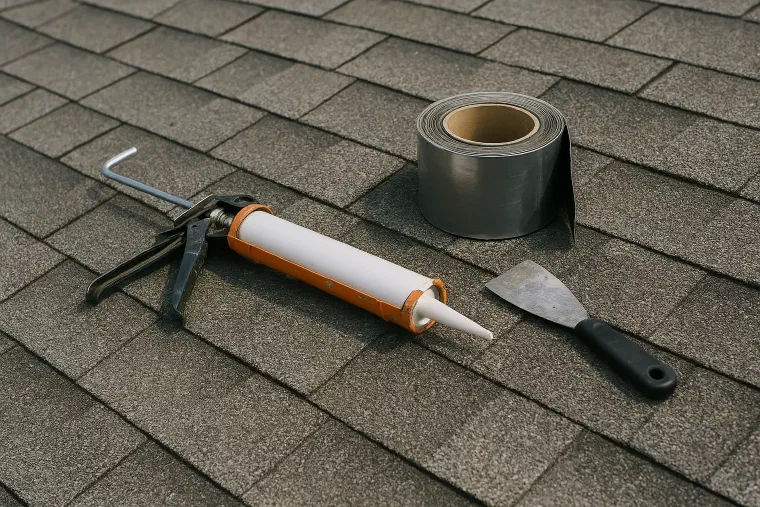
There is no single miracle product that stops every roof leak. The right material depends on where water is getting in: a pipe boot, a chimney joint, a metal lap, or a cracked shingle. Neutral‑cure silicone and high‑grade polyurethane sealants handle most residential penetrations well, while butyl tape works best for metal seams. More important than the product is fixing the mechanical detail behind the leak, because sealant alone rarely lasts more than a couple of years.
TL;DR
- A roof leak is almost never fixed by a single “best” material; the right choice depends on the roof type and the leaking detail.
- For permanent repairs, mechanically correct flashing, laps, and fasteners are the real barrier, with sealant used only as a supplement.
- Neutral‑cure silicone and polyurethane sealants are the most durable options for common penetrations, while butyl tape suits metal laps.
- Emergency patches like butyl tape, aerosol rubber, or a tarp buy 48 to 72 hours, not a season.
- The first step when you spot a leak is to contain the water inside, then trace it in the attic, because the ceiling stain rarely lines up with the roof entry point.
Why a Single “Best Material” Misses the Point
Roof leaks happen where two materials meet: a chimney against shingles, a vent pipe through the deck, a wall above a lower roof. The gap, the angle, and the thermal movement at those transitions are what let water in. A sealant squeezed over the surface might hold for a few months, but it can’t replace the laps, overlaps, and mechanical fastening that keep water out for decades.
Industry guidance is clear: sealant should be used only as a supplement to a properly designed flashing, never as the primary waterproofing barrier. When a leak returns after a quick caulk job, it’s usually because the flashing underneath was never right in the first place. Before you buy a tube of anything, it’s worth having a free roof inspection to pinpoint the real entry point.
Temporary vs Permanent Leak Fixes at a Glance
Quick‑fix products have their place, but they serve different purposes than a real repair. The table below separates the things that can buy you a few dry days from the ones that belong in a lasting fix.
| Material | Best for | Typical lifespan | Stopgap or part of a real repair? |
|---|---|---|---|
| Butyl emergency tape | Metal laps, small punctures, temporary seal | Days to a few months | Stopgap only |
| Aerosol rubber sealant | Small shingle cracks, vent collars | Weeks to a few months | Stopgap only |
| Roofing tar / plastic cement | Flashing seams, low‑slope patches (temporary) | 1 to 3 years if surface is clean | Can be part of a repair, but not a permanent solution |
| Neutral‑cure silicone sealant | Pipe boots, flashing joints, skylight perimeters | 10, 20+ years in a well‑designed joint | Part of a real repair when used with proper flashing |
| Polyurethane sealant | Concrete, metal, and many roofing substrates | 10 to 20 years | Part of a real repair |
| Peel‑and‑stick patch (modified bitumen) | Flat roof punctures, low‑slope membranes | 2 to 5 years | Temporary or part of a larger membrane repair |
| Tarp (secured) | Emergency coverage over a large area | Days to a few weeks | Stopgap only |
A small roof repair typically starts around $350 to $550, which is often less than the cost of chasing the same leak with repeated store‑bought patches.
What Is the Best Material to Seal a Roof Leak?
For most residential penetrations and flashing joints, a high‑quality neutral‑cure silicone or a polyurethane sealant is the best choice. Silicone stays flexible through temperature swings and resists UV degradation, while polyurethane bonds well to wood, metal, and concrete and can be painted. The key is matching the sealant to the substrate and the amount of movement the joint will see.
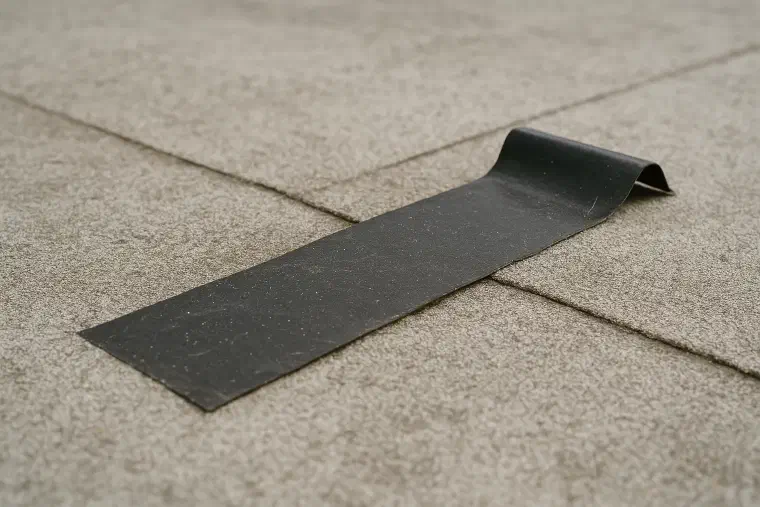
Butyl tape is the go‑to for metal lap joints and small punctures because it stays pliable and adheres without needing a perfect dry surface. On asphalt shingle roofs, oil‑based roof cements can soften the shingle mat, so they’re best avoided unless the manufacturer explicitly approves them for that use. A roof flashing repair that replaces corroded step flashing and uses a bead of silicone only at the last lap will outlast any surface smear.
What’s the Longest‑Lasting Roof Sealant?
A premium neutral‑cure silicone can remain watertight for 20 years or more when it’s placed in a low‑movement joint with correct lap geometry. That kind of lifespan, though, depends on the sealant being a supplement to a mechanically sound flashing, not the entire waterproofing strategy. If the sealant is asked to bridge a gap that should have been closed with metal, it will fail in a few seasons.
Polyurethane sealants can also reach 10 to 20 years, and they offer better adhesion to some materials. The real difference in longevity comes from the detail design: a bead of silicone sandwiched between two overlapping pieces of metal, protected from direct sun and ponding water, will outlast the same product smeared across a cracked pipe boot. The sealant’s chemistry matters, but where and how it’s applied matters more.
How Do You Stop a Roof Leak Permanently?
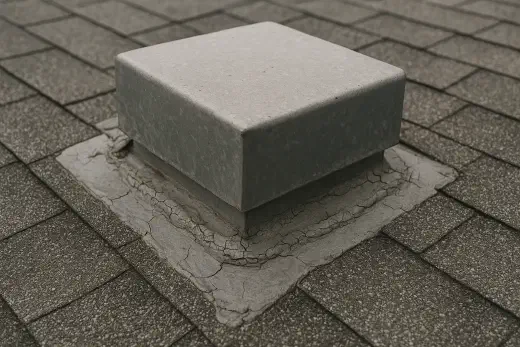
A permanent fix starts with finding the exact entry point, then making a mechanically sound repair. That usually means replacing a section of step flashing, cutting a new reglet in a chimney and inserting counterflashing, or swapping a dried‑out pipe boot for a new one with a silicone collar. The sealant goes on last, just to close the final gap, never as the main barrier.
This approach works because it respects the way water moves. Flashing laps are designed to shed water downhill, and the sealant only has to handle capillary action and wind‑driven rain at the very edge. A chimney reflash done this way can run $800 to $2,200 and is a completely different repair from a tube of caulk around the base. A proper roof repair that addresses the root cause will hold up for the life of the surrounding roof.
Can You Fix a Roof Leak With Just Caulk?
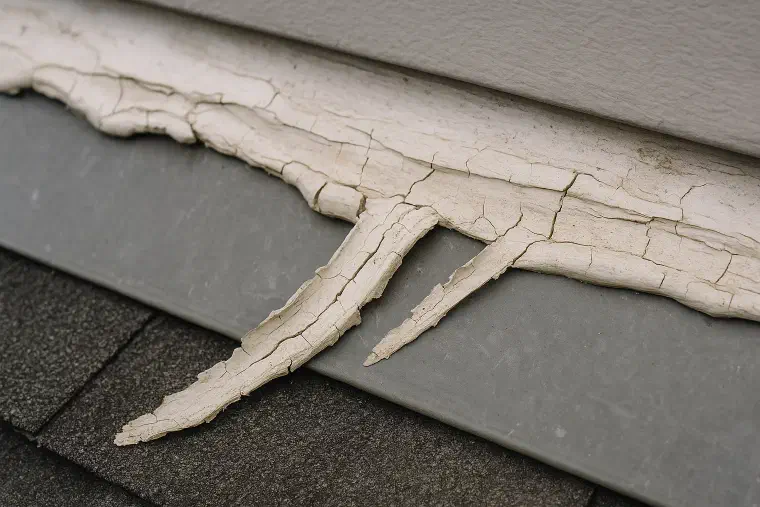
No. Caulk alone is a scheduled re‑leak. Thermal expansion and contraction, UV exposure, and the constant presence of moisture will break the bond within a few seasons, often sooner. Caulk has a role in a real repair as the final seal after the flashing has been mechanically integrated, but smearing it over a crack or a joint without addressing the underlying detail is a temporary patch.
The most common homeowner mistake is using the wrong type of caulk. Latex caulk has no business on a roof; it dries rigid and cracks. Even the right sealant, like a neutral‑cure silicone, will fail if applied over dirt, moss, or a wet surface. A proper repair involves cleaning the area, mechanically securing the flashing, and then applying a compatible sealant only where the two surfaces meet.
Does the Roof Material Change Which Sealant You Should Use?
Yes, and using the wrong product can make things worse. Oil‑based roof cements and some solvent‑based sealants can soften asphalt shingles, causing the mat to swell and the granules to release. Certain silicones won’t stick to EPDM rubber, and polyurethanes may foam or fail to cure on damp TPO membranes.
| Roof type | Compatible sealants | Products to avoid |
|---|---|---|
| Asphalt shingles | Neutral‑cure silicone, polyurethane (manufacturer‑approved) | Oil‑based roof cements, coal‑tar products, latex caulk |
| Metal roofing | Butyl tape, neutral‑cure silicone, polyurethane | Acid‑cure silicone (can corrode metal) |
| EPDM rubber | Butyl tape, EPDM‑specific splice adhesive | Standard silicones, many polyurethanes |
| TPO / PVC | Manufacturer‑approved sealants, often a specific polyurethane or butyl | Generic silicone, petroleum‑based products |
| Flat built‑up / modified bitumen | Asphalt‑based cement (for repairs), polyurethane for penetrations | Solvent‑based products that can dissolve the membrane |
When in doubt, check the sealant label for the roof surface it’s designed for. A metal roofing seam sealed with the wrong product can turn a small drip into a corrosion problem, and a flat roof repair that uses incompatible sealant may start leaking again within weeks.
Where Do Most Roof Leaks Actually Start? (It’s Not the Shingles)
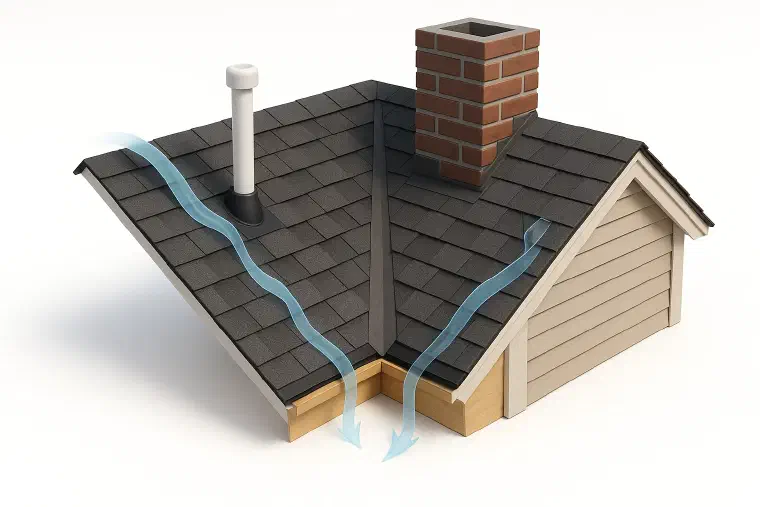
The overwhelming majority of leaks begin at penetrations and transitions: chimneys, wall‑to‑roof junctions, vent pipes, skylight curbs, and valleys. Shingles themselves rarely leak unless they’re physically broken or blown off. The real trouble spots are where one material meets another and the flashing that bridges them has failed.
Step flashing at walls, counterflashing at chimneys, and kickout flashing at roof edges all work on the same principle: each piece overlaps the one below it, so water is always directed outward and downward. When a piece corrodes, pulls loose, or was never installed correctly, water finds the gap. A chimney flashing repair or a skylight repair that addresses the flashing geometry will stop the leak far more reliably than any sealant applied to the surface.
Emergency Fixes: What to Use Until a Roofer Arrives
When water is coming through the ceiling at 2 a.m., the goal is to stop interior damage, not to permanently fix the roof. Butyl emergency tape, aerosol rubber sealant, and a properly secured tarp are the three most reliable stopgaps.
- Butyl tape sticks to wet surfaces and can seal a small puncture or a lifted seam for a few days. It doesn’t hold up in extreme heat or under standing water, so it’s a short‑term bandage.
- Aerosol rubber sealant sprays on and can cover small cracks or vent collars. It works best on dry surfaces and won’t bridge a gap larger than a quarter‑inch.
- A tarp is the right answer for a larger area, but it must be secured with boards or sandbags, not just draped over the ridge. A loose tarp can catch wind and cause more damage.
All of these are designed to buy 48 to 72 hours. Emergency tarping by a professional typically runs $350 to $900, and many companies will credit part of that toward the permanent repair. If you need an emergency roof repair, calling right away keeps a small problem from turning into a ceiling replacement.
What’s the First Thing You Should Do When You Spot a Leak?
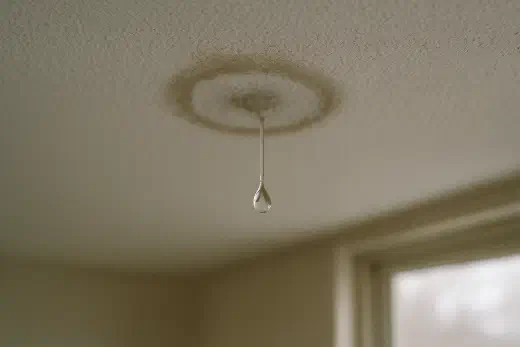
Contain the water inside, then trace it. Put a bucket under the drip, and if the ceiling is bulging, poke a small hole to let the water drain in a controlled spot rather than letting the drywall collapse. Next, head to the attic with a flashlight and look for the water path. The stain on the ceiling is rarely directly below the roof penetration; water often runs along a rafter or the underside of the sheathing before dropping.
Take photos of what you find, including the attic and the ceiling stain, then call for a free roof inspection. An experienced roofer can trace the entry point even when the leak path isn’t obvious. If the leak is active and the source isn’t clear, a paid leak diagnosis ($150 to $400) that uses a hose test or moisture meter can pinpoint it without guessing.
Frequently Asked Questions
Can I use Flex Seal to stop a roof leak permanently?
Flex Seal and similar aerosol rubber products are designed for temporary emergency use, not permanent repairs. They can seal a small crack or hole for a few weeks to a few months, but they will eventually degrade under UV exposure and thermal movement. A lasting fix requires replacing the damaged flashing or shingle and using a compatible sealant only as a supplement.
Will a tarp stop a roof leak during a storm?
A properly secured tarp will keep rain out of a damaged area for the duration of a storm, but it’s not a hands‑off solution. Wind can lift an unsecured tarp and cause more damage, and water can still pool in low spots. A tarp should be seen as a short‑term measure until a roofer can make a permanent repair.
How do I find the source of a roof leak if there’s no attic access?
Without an attic, you can look for clues on the roof surface: lifted or missing shingles, cracked pipe boots, rusted flashing, or debris dams in valleys. A professional inspection that includes a hose test can replicate the leak and identify the entry point from above, even when there’s no interior view.
Is roofing tar a good permanent fix for leaks?
Roofing tar can seal a small flashing seam for a year or two, but it’s not a permanent solution. It hardens, cracks, and traps moisture against the roof deck. In many cases, tar applied by a previous owner hides rot and makes a proper repair more difficult. A mechanical flashing repair will outlast any tar patch.
Does homeowners insurance cover roof leak repairs?
It depends on the cause. Insurance typically covers sudden, accidental damage from a storm or a fallen tree, but it does not cover leaks caused by gradual wear, neglected maintenance, or an aging roof. If the leak is the result of a covered event, the repair may be eligible, but the policy won’t pay for damage that built up over years.