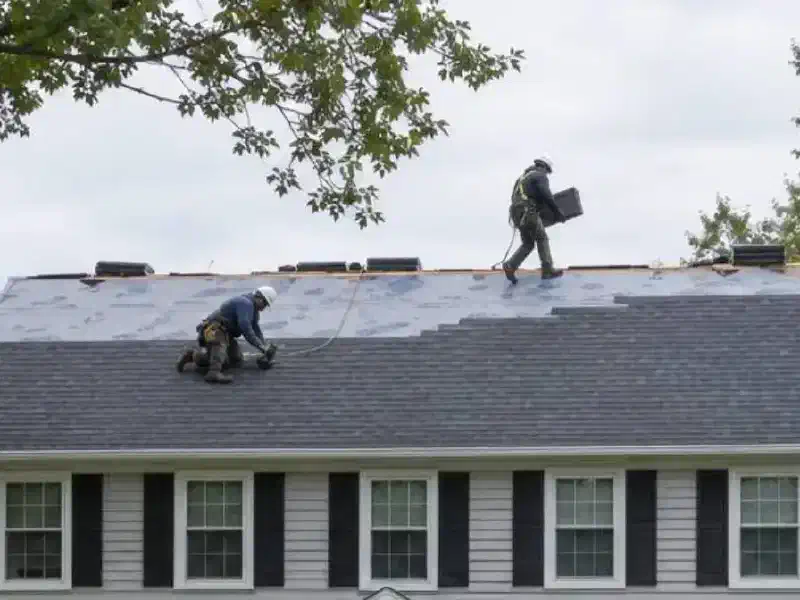
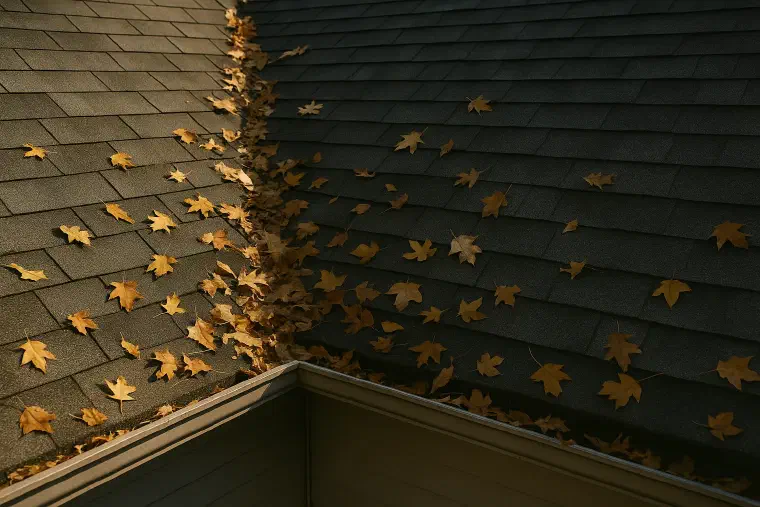
The best time of year for roof repair in Ellicott City is spring or fall, when daytime temperatures hold steady between 40°F and 85°F so shingle adhesive strips bond correctly. Summer heat softens shingles and winter cold prevents sealing, but the shoulder seasons offer dry weather and moderate temperatures for most repair work.
TL;DR
- Spring and fall are the best seasons for roof repair because temperatures stay in the 40°F to 85°F shingle-sealing window
- Summer works for small patches but heat softens shingles and afternoon storms can interrupt crews
- Winter repairs should not wait if you have an active leak, but some materials need hand-sealing below 40°F
- Different repairs tolerate different weather: a pipe boot replacement in November is usually fine, a valley rebuild in January is riskier
- Book a free inspection in late winter or early spring to catch small problems before peak-season scheduling delays
Why are spring and fall the best seasons for roof repair?
Spring and fall are the best seasons for roof repair because daytime temperatures stay within the 40°F to 85°F range that lets asphalt shingle adhesive strips activate and lock into place. Moderate weather in these shoulder seasons means crews work on dry roofs without fighting ice, extreme heat, or afternoon thunderstorms that shut down mid-day work.
The climate normals for this region show exactly why this matters. Spring and fall in Howard County deliver the kind of stable, dry stretches that let sealants cure and shingles settle without interruption. A repair done in October has weeks of cooperative weather ahead of it. A repair done in July has to dodge heat and storms.
For most roof repair work, the calendar is less about comfort and more about chemistry. Shingles need warmth to seal. Sealant needs dry surfaces to bond. Flashing needs to be worked when metal is not cold enough to stiffen fingers and crack under pressure. Spring and fall check all those boxes without the drama of the other two seasons.
What temperature do shingles need to seal properly?
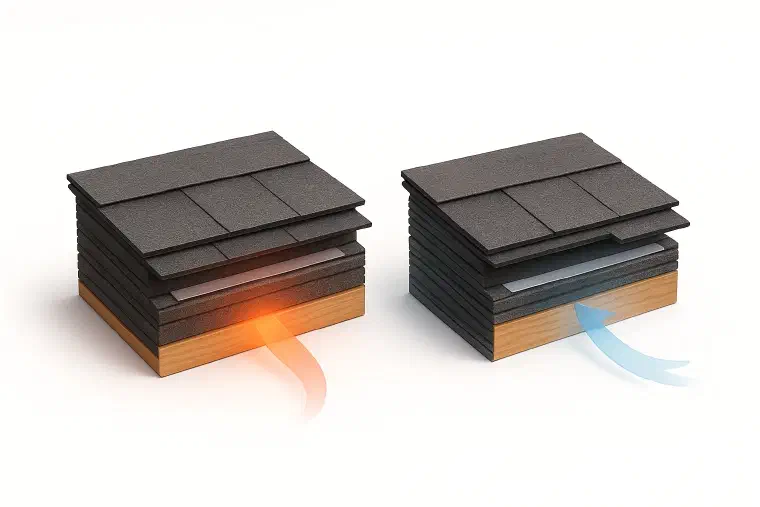
Asphalt shingles generally need temperatures above 40°F to activate their adhesive sealant strips, with the most consistent bonding happening between 40°F and 85°F. Below that floor, the sealant stays stiff and the shingle never fully locks to the course beneath it.
Shingle manufacturers design sealant strips to bond once temperatures reach the right range. When a shingle is installed in cold weather, the strip may not activate at all until spring. That leaves the shingle held in place by nails alone, which is a problem if wind gets under it before the seal forms.
Cold-weather installation often requires hand-sealing each shingle with adhesive, which adds labor and cost. Roofing contractors in colder climates describe this as standard practice for winter work, not a shortcut. The wind uplift testing done by industry researchers shows why seal strength matters: an unsealed shingle is far easier for wind to lift, and once one goes, the rest of the course follows.
On the other end, extreme heat above 85°F makes shingles soft and more prone to granule loss under foot traffic. The sweet spot, then, is that middle band where the sealant activates but the mat stays firm enough to walk on.
Is summer a bad time for roof repair?
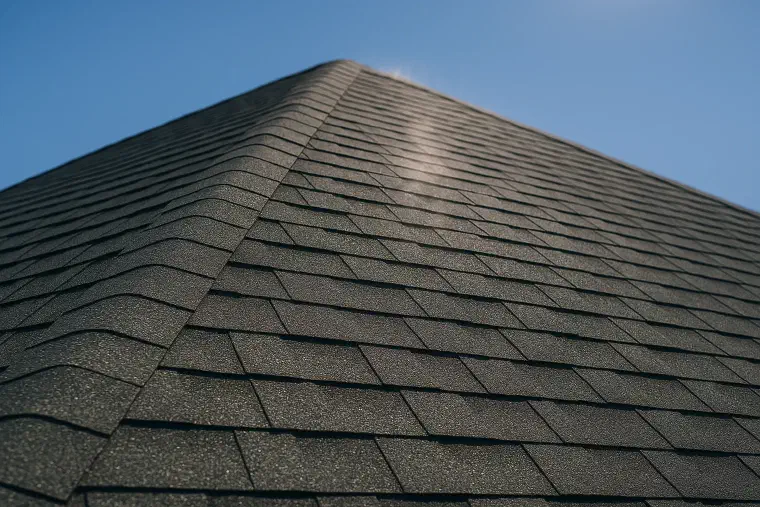
Summer is not a bad time for roof repair, but it carries real trade-offs: heat softens shingles, foot traffic scuffs granules, and afternoon thunderstorms can stop work mid-job. A small patch in June might be fine. A larger flashing job in August will test everyone’s patience.
Roof surfaces in summer can run far hotter than the air temperature. The Department of Energy notes that dark roofs absorb significant solar heat, which is why they recommend cool roofing materials in hot climates. That same heat makes shingles pliable and easy to damage when a boot or ladder presses into them.
The other summer issue is the weather pattern itself. Afternoon storms roll through Howard County with little warning, and a roof that is half open when rain starts becomes a problem. Seasonal repair timing analysis consistently ranks summer below spring and fall for exactly this reason: the work is possible, but the interruptions are frequent.
Summer can still work well for small, quick repairs. A single shingle replacement or a pipe boot swap takes an hour, and a good crew can fit it between storms. For anything bigger, spring or fall is the better bet.
Does the best season change for different roof repairs?
Yes, the best season shifts depending on the repair, because a small shingle patch or pipe boot replacement tolerates cool weather far better than a valley rebuild or a large flashing job. Each repair type has its own temperature and moisture limits.
A straightforward shingle replacement in November is usually fine. The repair area is small, the sealant strip on the new shingle will bond on the next warm afternoon, and the surrounding roof stays untouched. The same is true for a pipe boot swap, which is mostly a matter of pulling the old boot and seating a new one.
Flashing work is different. Roof flashing repair involves bending metal, setting it into joints, and often using sealant to close small gaps. Cold metal is harder to work. Sealant applied below 40°F may not cure. And any flashing detail that depends on caulk to keep water out is, in our view, a scheduled leak anyway. That is why we prefer mechanical integration over sealant whenever the roof allows it.
Here is how common repair types line up by temperature tolerance:
| Repair type | Cold weather tolerance | Warm weather tolerance | Best window |
|---|---|---|---|
| Shingle replacement (1 to 3 shingles) | Needs above 40°F to seal | Good, with care on soft shingles | Spring or fall |
| Pipe boot replacement | Tolerates cooler temps | Excellent | Any dry day above 40°F |
| Ridge cap resecure | Needs hand-sealing below 40°F | Good | Spring or fall |
| Valley repair | Poor below 40°F | Good, but heat slows work | Spring or fall |
| Flashing replacement | Poor below 40°F | Moderate, heat softens metal work | Spring or fall |
| Emergency tarping | Acceptable any time | Acceptable any time | Any season |
Pricing gives you a sense of scale. A small repair near the minimum lands around $350 to $650 for one to three shingles, while a pipe boot runs $350 to $750, and a ridge cap resecure is $350 to $700. Those are quick jobs that fit into almost any season. A valley repair at $700 to $1,800 is a bigger commitment and worth scheduling for a stable weather window.
What happens if you need roof repair in winter?
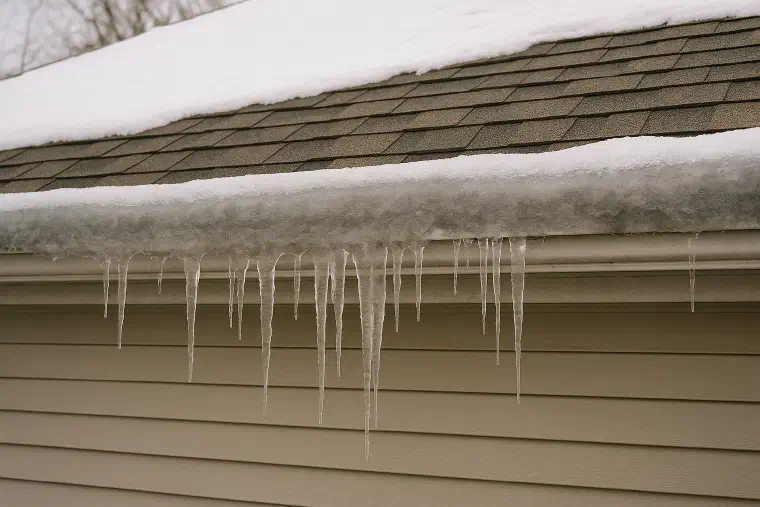
If you need roof repair in winter, do not wait, because an active leak gets more expensive every week it runs, and emergency tarping or a targeted repair can bridge your roof safely until spring. The calendar should never be the reason water keeps coming through your ceiling.
FEMA guidance is clear that emergency repairs after storms or damage should happen immediately, regardless of season. A tarp over a damaged section stops water entry and buys you time to plan the permanent fix. In our area, that tarp typically runs $350 to $900, and we always tell you up front whether that cost gets credited toward the final repair.
Cold weather does complicate things. Shingles installed below 40°F may not seal until spring, which means a repair done in January often needs hand-sealing to hold through winter winds. Roofing best practices for cold weather confirm that hand-sealing is a normal, accepted method, not a workaround. Masonry work near chimneys cannot be done below 40°F at all.
For an active leak in January, call our emergency roof repair line. A real person answers 24/7, and we can get a tarp on the roof fast, then plan the permanent fix for the first reliable weather window.
Ellicott City roof repair timing by season
Each season in Howard County has a distinct personality, and the best repair window depends on what your roof actually needs. The table below breaks down what to expect from each part of the year for roofing in Ellicott City.
| Season | Typical conditions | Repair pros | Repair cons | Best use |
|---|---|---|---|---|
| Spring (March to May) | Mild temps, moderate rain | Shingles seal well, crews are fresh, dry stretches are common | Spring storms can delay scheduling | Leak repairs, flashing, most full scope work |
| Summer (June to August) | Hot, humid, afternoon storms | Long daylight, fast drying | Heat softens shingles, granule scuffing, storm interruptions | Small patches, inspections |
| Fall (September to November) | Cool, dry, stable | Best sealing window, predictable weather | Shorter days, busy schedules | Major repairs, valley work, flashing replacement |
| Winter (December to February) | Cold, freeze-thaw cycles | Emergency work is possible | Shingles may not seal, masonry cannot be done below 40°F | Tarping, urgent leak stops |
One local factor worth naming: Ellicott City sees real freeze-thaw cycling through winter, which is why missing or short ice-and-water shield at the eaves becomes a genuine failure mode. Water expands when it freezes, and repeated cycles work their way into any gap. A repair done in the wrong season can leave a roof more vulnerable to that cycle, not less.
How to plan a roof repair so the timing actually works
The best way to make roof repair timing work in your favor is to act before the rush. Spring and fall are the ideal windows, but they are also the busiest months for every roofer in Howard County. Booking early, catching small issues before they become emergencies, and building in a buffer for weather all help.
Start with a free roof inspection. If you schedule one in late winter or early spring, you give yourself time to plan repairs for April or May, before the peak-season schedule fills up. The inspection is free, and the quote for anything it turns up is free too.
Expect realistic timelines. In normal conditions, a repair goes from call to completion in 1 to 2 weeks. During peak season or after a regional storm, that stretches to 3 to 6 weeks. A single wind event can turn a 3-day backlog into a 3-week one overnight. If you need work done in September or October, call in August.
The other piece of planning is less about the calendar and more about the roof itself. Most roofs do not need replacing. They need the one spot that is letting water in found and fixed. The sooner that spot is identified, the smaller the repair stays. Waiting for the “perfect” season to address a small problem usually means paying for a bigger one later, often in the worst possible weather.
Frequently asked questions
What is the 25% rule in roofing?
The 25% rule is a common insurance guideline: if more than 25% of a roof slope is damaged, the insurer may lean toward replacing the entire slope instead of patching individual sections. The exact threshold varies by carrier and policy, so it is not a law, just a rule of thumb. The practical takeaway is that widespread damage often makes a bigger repair the smarter financial choice, even when a patch looks cheaper up front.
How long do roof repairs typically last?
A well-matched shingle repair on a roof under 12 years old can last the remaining life of the roof, often 10 to 20 years. Flashing repairs and pipe boot replacements have shorter windows, commonly 5 to 15 years depending on materials and exposure. The roof’s overall age, the condition of the decking underneath, and the quality of the original installation are the biggest factors.
What should you avoid saying to a roof insurance adjuster?
Avoid speculating about the cause of damage, admitting to deferred maintenance, or saying the roof was fine before the storm without documentation to back it up. Do not sign anything or accept a settlement until you understand the full scope of the damage. Let photos, written findings from a contractor, and the adjuster’s own documented assessment do the talking for you.
What is the best season to replace a roof?
Replacement follows the same logic as repair: spring and fall are ideal because shingles seal best between 40°F and 85°F and crews work without ice or extreme heat. Late spring through early summer can work too, but scheduling delays are common in peak season, and a roof torn off in July means your attic is exposed to full summer heat until the new shingles go down. Booking early matters more than the exact month.
Can a roof be repaired while it is raining?
No, roofing repairs should not be done in active rain. Shingles need a dry surface to seal, sealants will not bond to wet materials, and working on a wet roof is unsafe for the crew. Emergency tarping can stop water entry during rain, but the permanent repair waits for the next dry stretch. If your roof is leaking during a storm, call for tarping now and plan the fix for clear weather.