

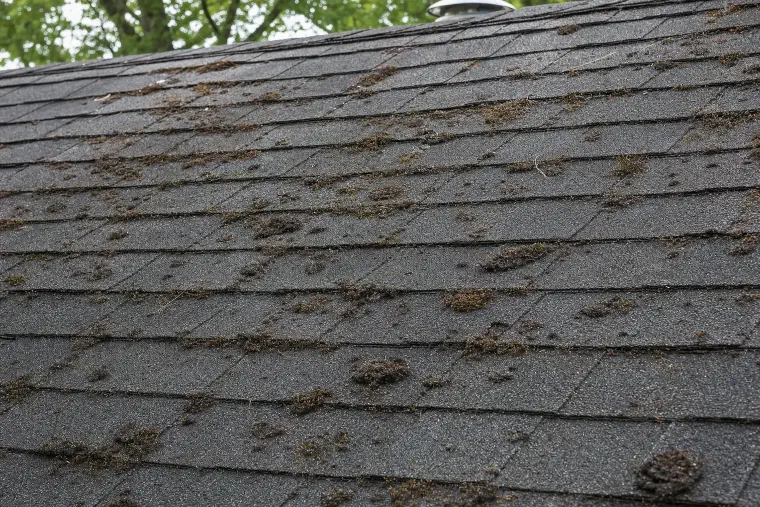
The safest thing to kill moss on an asphalt shingle roof is a soap-based moss killer made for roofs, because it kills the moss without eating the shingles or your gutters. Bleach works but is hard on plants. Zinc products can corrode copper. A pressure washer kills nothing and ruins the shingles.
The short version
- Soap-based moss killers (fatty acid salts) are the gentlest option, and they are the ones Oregon State University lists for home use.
- Bleach and water is what the shingle makers’ association recommends, but it needs care around plants and paint.
- Zinc sulfate is out if you have copper gutters or flashing, and it can harm fish and plants downstream.
- Whatever you use, the dead moss still has to come off, and a pressure washer is never the way.
- Moss comes back unless more sun reaches the roof.
What is the gentlest moss killer for shingles?
A soap-based product made from fatty acids is the gentlest. Oregon State describes potassium salts of fatty acids (opens in a new tab) as biodegradable, soap-based products that kill moss by damaging its cell membranes. Its home-use list also names ammonium salts of fatty acids (opens in a new tab), which is what you look for on the label.
Read the label before you buy, because the front of the bottle usually says “moss killer” and nothing more. The ingredient list is what tells you whether it is a soap or a metal.
How do the common moss killers compare?
They differ most in what else they can damage. This table sets out the ones people reach for, and what to watch for with each.
| What you use | What it is | Watch out for |
|---|---|---|
| Fatty acid soap | Soap-based moss killer | Over-spray on plants; you still remove the dead moss |
| Chlorine bleach and water | Half bleach, half water | Plants, paint and runoff below the roof |
| Zinc sulfate | A metal salt | Corrodes copper; harms aquatic life; can stain concrete |
| Pressure washer | No cleaner at all | Strips the granules off the shingles |
| Vinegar, dish soap, home mixes | No source we trust backs them | A ladder trip that may not work |
Is bleach safe on shingles?
Bleach is safe on shingles when it is mixed and rinsed the way the makers say, but it is harder on everything around the roof. The Asphalt Roofing Manufacturers Association says the most effective method is a 50:50 mix of laundry strength liquid chlorine bleach (opens in a new tab) and water. You spray it on, leave it for 15 to 20 minutes, then rinse with low pressure water.
The same page tells you to protect landscaping and the area around the house from the solution, and to wear protective gear. So the shingles are the easy part. The shrubs under the eaves, the painted trim and the patio are what get hurt.
That is why we would reach for a soap-based product first on a house with a lot of garden under the roofline. Bleach is a fair choice when the moss is thick and the beds below are covered.
Will zinc sulfate kill moss, and what does it harm?
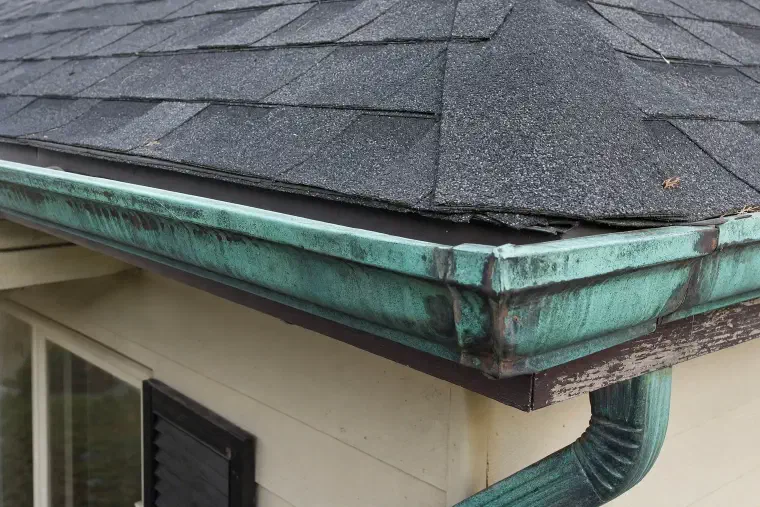
Zinc sulfate kills moss, and it can also damage metal and wildlife. Oregon State warns not to use it if your roof has copper gutters, downspouts or flashing (opens in a new tab), because zinc corrodes copper. Its moss guide goes further and says products with zinc or copper are toxic to people, pets, plants and aquatic animals (opens in a new tab), and can stain concrete.
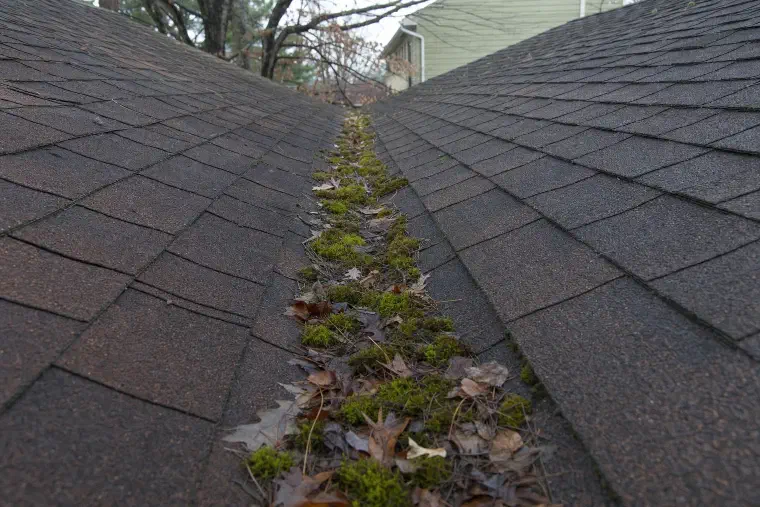
Check your gutters and flashing before you buy anything with a metal in it. Copper is easy to spot, since it is brown when new and turns green with age.
Can you pressure wash moss off a roof?
No, and this is the one method that harms shingles for certain. The shingle makers’ association says never use a pressure washer (opens in a new tab) on an asphalt roof, because it causes granule loss and very likely early failure of the roof. Granules are the gritty top layer that shields the shingle from the sun.
Oregon State also says asphalt shingles damage easily (opens in a new tab), so any scraping should be done gently with a brush or a putty knife, never a wire brush or a scraper with a sharp edge. Our longer answer on the whole job is in how to get rid of moss on a roof.
What do you do with the moss once it is dead?
You still have to take it off. Oregon State’s guide is plain that a moss killer works, but you must still remove the dead material (opens in a new tab). Dead moss left on the roof keeps holding leaves and water against the shingles, so the roof stays damp.
Brush it down gently, from the top of the slope, and rinse with a garden hose. The brown, dry look in the photo at the top is moss that has died but not yet come off.
When should you put moss killer on?
On a dry day with no rain coming. The Oregon State guide says not to apply it when it is raining or when rain is expected (opens in a new tab) in the next 24 hours, because the product has to stay on the moss to work. It also warns that treatments can run off into waterways and harm wildlife, especially aquatic life.
So keep the runoff away from storm drains where you can, and rinse any plants that get hit. A roof is also a poor place to work alone. A steep pitch, a wet slope or a second story is a good reason to hire it out.
How do you keep the moss from coming back?
Let in more sun. Oregon State’s advice is short: let the sun in or it will return (opens in a new tab). Trim the branches over the roof, and keep the valleys and gutters clear of wet leaves.
Here is what we see on wooded lots around Ellicott City. Heavy shade keeps the roof damp, the damp grows moss and algae, and the moss can lift the edges of the shingles. A cleaner only clears what is there today. The shade is what grows the next batch.
Common questions
Does moss killer harm shingles?
A soap-based moss killer used as the label says should not. The harm comes from the wrong tool: a pressure washer, a stiff scraper, or a metal product on a roof with copper. Oregon State warns that asphalt shingles damage easily, so be gentle with the brush.
Will bleach void my shingle warranty?
We cannot tell you, because warranties differ by maker and by product line. Read your shingle warranty, or ask the maker, before you spray anything. If a roofer does the cleaning, ask them the same question first.
Should moss killer be left to work on its own?
No. The killer stops the moss growing, but the dead material has to be brushed off and rinsed away. Left in place, it holds moisture against the roof just as the live moss did.
What to do next
If you are not sure what is under the moss, the easy first step is a free roof inspection. We walk the roof and lift shingles to check them, and give you a written report with photos, with no obligation to book work. If the moss has already curled or loosened shingles, that is a roof repair job, and cleaning alone will not lay them back down.


