

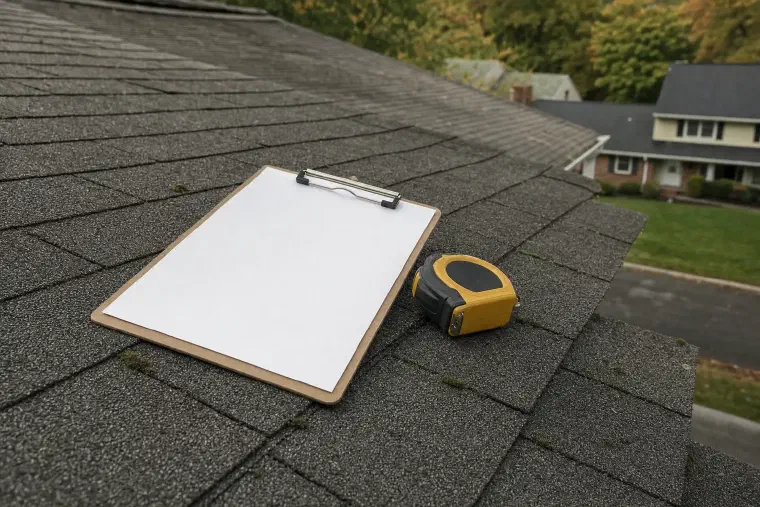
A good roof estimate names the work, the materials, the price and the start and finish dates in writing, and it says what is not included. The last part matters most. Two bids can look alike and differ by thousands of dollars because one leaves out the decking, the flashing or the cleanup.
The short version
- A roof estimate should describe the work and the materials, not just give a number.
- Look for tear-off, underlayment, flashing, vents, permits and cleanup as separate lines.
- Look for what is left out: rotted decking, gutters, trim, skylights and inside repairs.
- Get the warranty, the dates and the payment schedule in writing.
- Compare bids line by line, not by the bottom number.
What does a roof estimate have to say about the work?
It has to describe the work and the materials. Maryland’s contractor licensing office says a home improvement contract needs a description of the work and the materials (opens in a new tab) to be used. An estimate that says “new roof, one price” gives you nothing to hold anyone to.
Look for the shingle line and type, the number of squares (a square is 100 square feet of roof), and the pitch. If you want to check the squares yourself, our guide to measuring a roof in squares shows how. A bid with no measurements was priced by guessing.
Which parts of the roof should be listed?
Each layer of the roof system should have its own line. Here is what a full replacement from us includes, and a fair bid from anyone should cover the same ground:
| Line | What it should say |
|---|---|
| Tear-off | Removal of the old roof, up to two layers |
| Dumpster and disposal | Haul-away and fees included |
| Underlayment | Synthetic underlayment and ice-and-water shield, at least at code minimum (eaves, valleys, penetrations) |
| Drip edge and starter | New drip edge, starter strip and field shingles |
| Flashing | New flashing at chimneys, walls, valleys, skylights and pipes, unless reuse is stated |
| Ventilation | Ridge vent or box vents, per a ventilation plan |
| Permits | Permit and final inspection, passed through at cost |
| Cleanup | Magnetic nail sweep and site cleanup |
Anything missing from that list is either not included or buried in a lump sum. Ask which one it is. Our roof installation page walks through the same list in more detail.
Is the flashing new or reused?
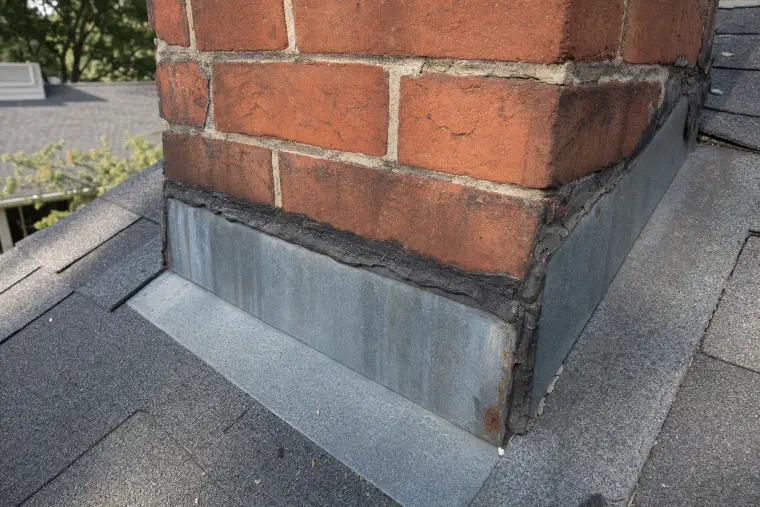
The estimate should say so in plain words, because reused flashing is the cheap shortcut we see most. Flashing is the metal that seals the joints where the roof meets a chimney, a wall or a pipe. It is where roofs actually leak.
Cheap bids often reuse the old chimney, step and kickout flashing. New flashing costs more up front and lasts longer. Caulk is a consumable with a 5 to 10 year life, so a detail that leans on caulk is a scheduled leak.
What happens if the decking is rotten?
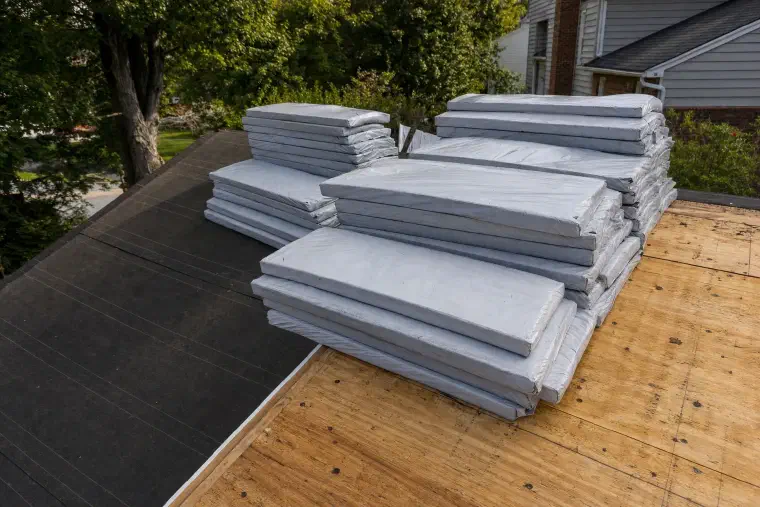
The estimate should give a price per sheet of decking, because nobody can see the wood until the old roof is off. The decking is the plywood or boards under the shingles. The Asphalt Roofing Manufacturers Association says a replacement gives the chance to inspect the roof deck (opens in a new tab) and that damaged boards must be replaced before new shingles go on.
So decking is almost never in the base price. Around Ellicott City it typically runs $70 to $150 per 4x8 sheet installed. A bid that says nothing about it has not made the problem go away. It has just left the surprise for later.
What is usually left out of an estimate?
Several things are separate lines or not covered at all, and the estimate should say which. These are the ones we hear about:
- Gutters and gutter guards: taking them off, putting them back, or fixing damage from the tear-off.
- Fascia, soffit and trim: rotted wood is time-and-materials or excluded.
- Skylights: replacing one is quoted separately, typically $800 to $2,000+ each, and it is smart to do it during a reroof.
- A second layer of old roofing: an extra per-square charge if two layers are there.
- Ventilation upgrades past code minimum.
- Solar panel removal and reinstall: a different company handles it, typically $2,000 to $5,000.
- Inside repairs: drywall, paint and insulation are never included.
A bid is not wrong for leaving these out. It is wrong for leaving them out without saying so.
Does the estimate cover ventilation?
It should at least mention it. The Asphalt Roofing Manufacturers Association says a reroof should include an evaluation of the existing attic ventilation (opens in a new tab). We think poor attic airflow is the most underrated roof killer. It cooks shingles from below and can cut a roof’s life nearly in half.
If the bid has no vents and no ventilation plan, ask why. If it only adds vents without opening the soffit intake, ask about that too.
What should the warranty line say?
It should name who stands behind what, and for how long. This Old House notes that shingle warranties apply to materials only (opens in a new tab) and are prorated by the age of the shingles. That means the shingle warranty does not pay for the labor if a flaw shows up.
Get the contractor’s workmanship guarantee in writing, with its length. A “50-year” number on a shingle box is a manufacturing defect warranty, not a promise about how long your roof will last. In Maryland, asphalt shingles realistically last 18 to 25 years.
What dates and payment terms belong on it?
A start date, an approximate finish date and a payment schedule. The Maryland licensing office says the contract should give estimated start and finish dates (opens in a new tab), and that a contractor cannot take more than one-third of the price as a deposit.
Timelines for a full roof run longer than the install day itself. The crew may finish in one day for a 25 to 40 square roof, but permits in Howard County take a few days to two weeks, and the whole project from signature to final inspection typically takes 2 to 6 weeks. An estimate that promises a start “next week” without mentioning a permit deserves a question.
Whose name should be on it?
The contractor’s, in full, with an address and a phone number. The same Maryland page says the contract must show the contractor’s name and address (opens in a new tab), along with the state’s registration details for them. Read that part before you sign anything, whoever you pick.
How do you compare bids?
Put them side by side and go down the same list. This Old House suggests getting quotes from at least three roofing contractors (opens in a new tab). The cheapest one is the first to check for missing lines: reused flashing, no ice-and-water shield past the eaves, no permit, no cleanup.
Then compare what happens when something goes wrong. Ask each one what they charge when the decking is bad, what they do when it rains on tear-off day, and what the workmanship guarantee covers. Our roof replacement cost guide has typical prices by roof size to check the totals against.
Common questions
Is a roof estimate the same as a contract?
No. An estimate is a price based on what can be seen, and a contract is the signed agreement with the final price and terms. Ask that the estimate’s lines carry over into the contract, so nothing disappears between the two.
Should a roof estimate be free?
Ours is, because a free roof inspection comes first and the written report gives you the squares and pitch, separate from any proposal. Some companies charge for detailed reports, so ask before they come out.
Does the estimate include decking repair?
Usually not as a fixed amount. It should give a per-sheet price for decking found rotten after tear-off, so the number does not surprise you mid-job.
Can the final price be higher than the estimate?
Yes, when the old roof hides something. The usual causes are rotten decking, a second layer, or framing problems found after tear-off. A good estimate names those cases ahead of time, with prices, so a change is a line you already read.
What to do next
The easiest way to get a roof estimate worth comparing is to start with a measured roof. Our free roof inspection gives you a written report with photos, the squares and the pitch, and no obligation to book anything. If you want to see how paying for a new roof can work, take a look at our financing page.


