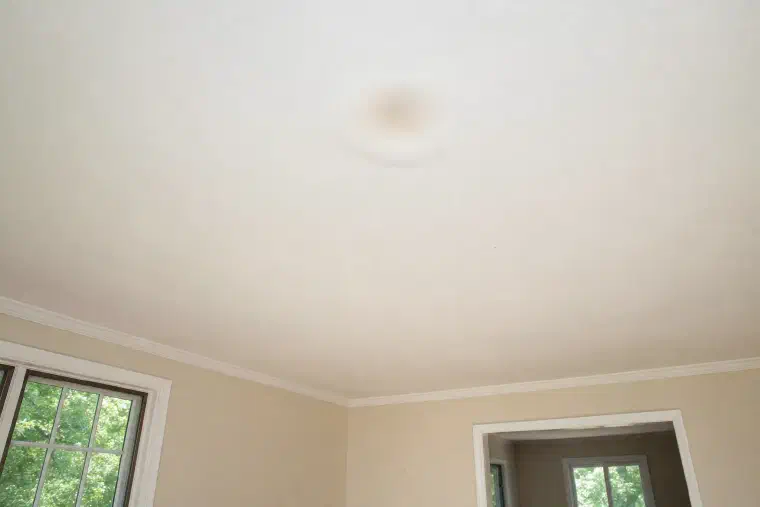
A water bubble in the ceiling means water is pooled on the other side of the drywall, and the ceiling can give way without warning. Stay out from under it, put a bucket on the floor below, and call a roofer to find where the water is getting in.
The short version
- Keep people and pets out from under the bubble. It holds more weight than it looks.
- Turn off power to that room at the breaker if the bubble is near a light or fan.
- Catch what drips, clear the floor and take photos.
- The bubble is where the water ended up, not where it came in. The roof opening is usually higher up and off to the side.
- A roofer can cover the roof the same day. Drywall, paint and insulation are a separate job.
Why does water make a bubble in the ceiling?
Drywall is paper and gypsum, and it holds water like a sponge until it can’t. When water drips onto the back of it from the attic, it soaks in, spreads and collects at the low point, and the paper face stretches into a round bulge. The paint on the front is what holds the water in, so the bubble can look dry on the outside for a while.
That also tells you something about timing. A bubble is a late sign. Like a ceiling stain, it usually shows up after water has been wetting the decking and insulation for a while. A bubble also means a fair amount has built up in one spot.
Is a bubble in the ceiling dangerous?
Yes, a little, and mostly for one reason: weight. A cubic foot of water weighs about 62 pounds (opens in a new tab). Even a bubble the size of a dinner plate can hold a lot of it, and a big sag holds far more. Wet drywall is weak, so the ceiling can drop all at once and bring wet insulation down with it.
The second danger is wiring. Water conducts electricity (opens in a new tab), so care is required around anything wet. If the bubble is near a light fixture, ceiling fan or smoke detector, turn that room’s power off at the breaker box, not only the wall switch. Our piece on water leaking from a ceiling light covers that case in more detail.
What should you do right now?
Make the space safe, then slow the damage. In this order:
- Clear the floor. Move furniture, rugs and electronics out from under the bubble and a few feet around it.
- Cut the power if there is a fixture near it. Leave it off until an electrician says it is fine.
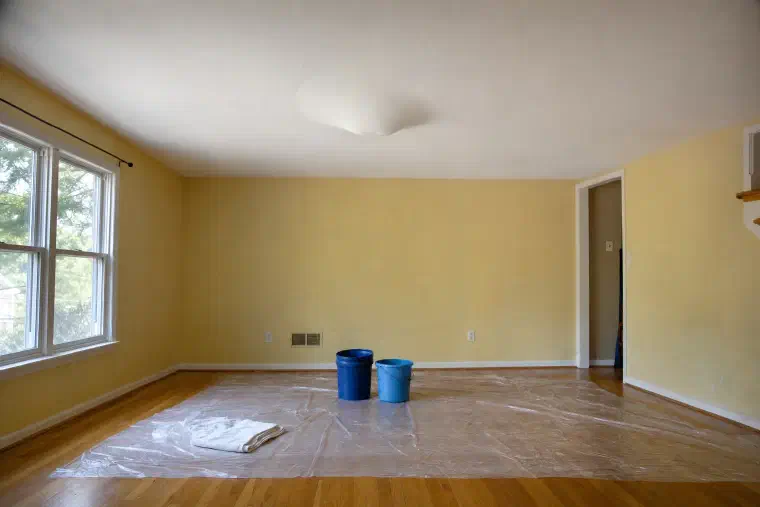
- Set up a catch. Spread a plastic sheet or old shower curtain, then a bucket with a towel in it, so water doesn’t splash.
- Take photos and write the time. Photograph the bubble from a few angles. Draw a pencil line around the edge so you can see whether it grows.
- Keep out from directly underneath. Stand to the side when you check on it.
Should you pop the bubble?
Only if it is small, nowhere near a fixture, and you are standing to the side of it. Otherwise, leave it and call. A bubble that is left alone can let go all at once, and that is the reason people poke a hole: a small opening at the lowest point lets the water run into a bucket at a steady pace instead of arriving in one load.
If you do it, use something small like a screwdriver tip, wear safety glasses, and stay out of the line of fall. Don’t cut a large hole and don’t pull the drywall down. Large sections of wet ceiling can bring a lot down on you, and there may be wires behind them.
A big, hard-looking bulge, anything near a light, or any sag you are unsure about is a call to a professional, not a do-it-yourself job.
Where is the water really coming from?
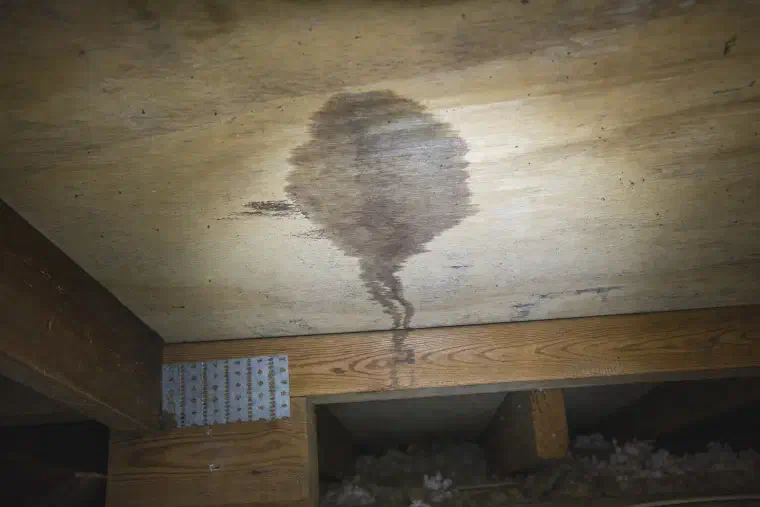
Rarely from straight above the bubble. Water gets in at one spot, runs along the wood under the roof, and drips onto the ceiling somewhere else. As This Old House puts it, the leak likely originates higher up (opens in a new tab), so follow any signs of water uphill.
If you can get into the attic safely, a flashlight is enough to look for dark patches on the underside of the roof boards and damp insulation. Don’t step between the joists, because only the wood holds weight, not the drywall.
Not every bubble is a roof leak. Here is how to sort the likely causes:
| Where the bubble is | What it often points to |
|---|---|
| Under a bathroom or laundry room | A supply or drain line, or a leaking exhaust fan duct |
| Under a chimney, skylight or roof vent | The flashing around it, or the unit itself |
| Away from any pipe, after rain | A roof leak: flashing, a cracked pipe boot or worn shingles |
| Along an outside wall, after a cold stretch | Ice built up at the eave, or moist air condensing in the attic |
| Under an upstairs bathroom, dry weather | Plumbing, so turn off the water supply and call a plumber |
If it is not clear which one you have, who to call for a water leak in the ceiling walks through telling a roof leak from a pipe.
How fast does the ceiling need to dry?
Within a day or two. The EPA says it is important to dry water-damaged areas and items (opens in a new tab) within 24 to 48 hours to prevent mold growth. Run a fan toward the spot, open a window if the air outside is dry, and use a dehumidifier if you have one.
Keep in mind that the roof has to be dealt with first, or the drywall gets wet again. The EPA also notes that absorbent materials such as ceiling tiles may have to be thrown away (opens in a new tab) if they become moldy. Soaked drywall and insulation that stay wet for days usually end up coming out.
What will it cost to fix?
These are typical area ranges, not a quote. If the roof has to be covered the same night, emergency tarping typically runs $350 to $900, and some roofers credit it toward the repair. A single leak diagnosis and repair usually lands between $500 and $1,600.
If the roofer has to trace a leak that won’t show itself, a hose test or moisture check typically costs $150 to $400. Wet decking under the patch adds $150 to $500 or more. No honest roofer can promise a leak will stop on the first visit, because finding the entry point is partly detective work.
What roof work never covers is the inside of the house. Drywall, paint and insulation are never included in a roof repair, so plan on a separate drywall patch once everything is dry.
Common questions
Will the bubble go away on its own?
No. Once the water drains out and the drywall dries, the paper may stay stretched and stained. It usually needs cutting out and patching, and the roof leak has to be stopped first or it will happen again.
Can I paint over a bubble in the ceiling?
Not yet. Paint over damp drywall traps the moisture, and the stain bleeds back through. Fix the roof, let everything dry, then repair the drywall and use a stain-blocking primer before the paint.
Is a ceiling bubble an emergency if it stopped dripping?
Treat it as urgent. A bubble that stopped growing may only mean the rain stopped, and the water that is already in there is still adding weight. Get it checked before the next storm, and keep people out from under it until then.
Does homeowners insurance cover a ceiling bubble?
It might, and your policy and the adjuster decide, not us. Keep your photos and a note of when you first saw it. Then call your insurance company and ask what your policy says before you start any big repair.
What to do next
Once the room is safe, the next step is covering the roof and finding the opening. Our emergency roof repair line is answered around the clock, and a crew can tarp the spot until a lasting fix is possible. If you would rather understand the damage first, a free roof inspection puts someone on the roof and in the attic with a written report and no obligation to book work. For the broader first steps, see what to do about a leak in the ceiling.