

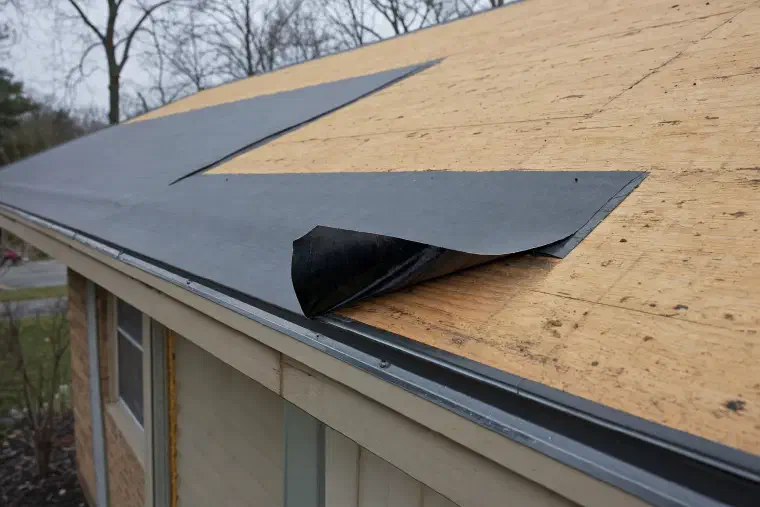
A metal roof goes over a solid wood deck, then a water-resisting sheet, and sometimes a thin layer of paper on top of that. The sheet is peel-and-stick membrane, felt or synthetic underlayment, and the right one depends on the metal panel and your climate. It is the backup layer if water gets under the metal.
The short version
- Underlayment is the sheet between the wood deck and the metal panels.
- The common choices are peel-and-stick membrane, felt and synthetic sheet.
- Peel-and-stick is the one that matters most at eaves, valleys and around chimneys.
- Metal panels move as they heat and cool, so what sits under them has to cope with that.
- Ask your roofer to name the product and where it runs, in writing.
What is underlayment on a metal roof?
It is the sheet that sits on the bare wood deck, under the metal. Think of the panels as the raincoat and the underlayment as the shirt: if rain gets past the first layer, the second one keeps the wood dry. We cover the basics in our article on what roof underlayment does.
Metal makes the job a little different from shingles. Metal panels are installed on solid or spaced sheathing (opens in a new tab), and the Building America guide says standing seam panels typically must go on a roof deck with sheathing. That wood deck is what the underlayment protects.
What are the choices?
There are three families, and a roof can use more than one. The same guide lists them together: for cold climates it says a continuous layer of roof underlayment (opens in a new tab) is needed, and it names felt, synthetic underlayment or a membrane as the options.
| Choice | What it is | Where it tends to fit |
|---|---|---|
| Peel-and-stick membrane | A sticky, rubbery sheet that bonds to the deck | Eaves, valleys, around chimneys, or the whole roof |
| Felt | Paper-like sheet soaked in asphalt, sold in layers | Under many panel types, often two layers |
| Synthetic sheet | Woven plastic, lighter and tougher than felt | A common choice across the roof field |
Our piece on synthetic vs felt underlayment goes deeper on those last two. Most of it was written about shingle roofs, so ask about the product’s use under metal before you assume it carries over.
Does a metal roof need peel-and-stick membrane?
At the edges and low spots, yes, in our opinion. Water backs up at eaves and valleys, and that is where a sticky sheet that seals around every nail does the most good. The Building America guide says the ice barrier should be two layers cemented together or a self-adhering sheet (opens in a new tab), running from the roof edge to at least 24 inches inside the exterior wall line.
That matches what we see in Ellicott City, where freeze and thaw cycles push meltwater up under the edge. We write about it in what ice and water shield is. Short or skipped coverage at the eaves, valleys and around skylights and chimneys is a fault we run into often.
The same guide also lists a self-adhered membrane over the entire roof deck (opens in a new tab) as one way to build a metal roof. Which setup fits yours depends on the panel and the roof, so ask.
What is a slip sheet, and why is it there?
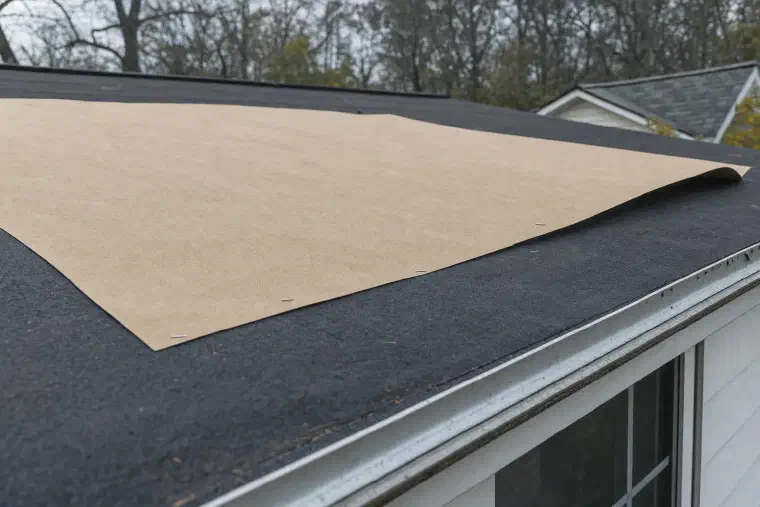
A slip sheet is a thin sheet of loose paper laid over the membrane, under the metal. Because it is loose, the panels are not stuck straight to the sticky layer below. The Building America guide shows the detail as a fully adhered membrane with a loose-laid slip sheet (opens in a new tab) of building paper over it.
This is why metal installers care about movement. Our own metal roofing page says the same: the panels move as they heat and cool, so the fasteners, the seams and the trim around chimneys and walls all have to allow for it.
Does underlayment make a metal roof quieter?
A little, along with the solid deck. This Old House says metal roofs are installed over plywood sheathing and are only around 8 decibels louder (opens in a new tab) than an asphalt roof. Our metal roofing page puts it the same way: solid roof boards and underlayment underneath make a big difference to rain sound.
The loud, drum-like metal roof people remember is usually a barn with no deck under it. We go through that in our article on how safe metal roofs are.
What should you ask a roofer about it?
The sheet is only as good as the details around it. Water gets into roofs at the edges, the valleys and the things that poke through, and those are labor details. Before you sign a quote for a metal roof, ask:
- Which underlayment is under the metal, by product name?
- Is there peel-and-stick at the eaves, valleys and around chimneys and skylights?
- Is there a slip sheet, and over what?
- Is the deck solid, and who replaces any rotted boards you find after the old roof comes off?
- What happens if it rains before the panels go on?
A roofer who answers these plainly has probably done it before. If something sounds vague, ask for it on the quote.
Common questions
Can you put a metal roof over old shingles?
Sometimes, but we would look at the deck first. You cannot see the wood under old shingles, and the underlayment is meant to sit on a sound deck. Whether it is a good idea depends on your roof, which is why we start with a free roof inspection.
Is felt okay under metal?
It can be. The Building America guide lists a two-layer #30 felt system (opens in a new tab) among its options for metal roofs. Felt is also the cheaper sheet, so it shows up on lower quotes. Check what the metal maker asks for, because the right pick depends on the panel.
Do all metal roofs need underlayment?
The sources we found say it depends on the panel and the climate, so we will not give a blanket answer. Ask which panel you are getting and what its maker calls for. On a home, we would want a solid deck with a water-resisting layer underneath.
What to do next
If you are comparing metal quotes, ask each roofer to write down the underlayment and where it runs. Our metal roofing installation page explains where metal suits a roof, and we will tell you honestly when it does not. Ask for a free quote and we will talk it through.


