

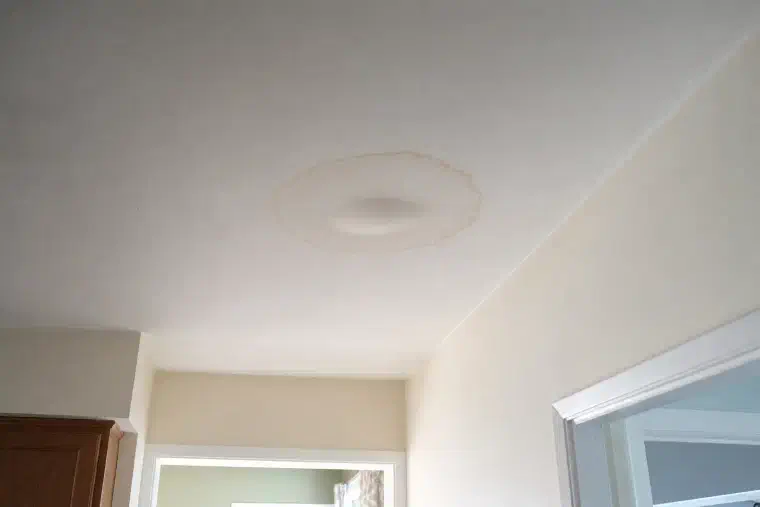
Call a plumber if the water keeps coming when it hasn’t rained, and a roofer if the leak follows the weather. A water leak in the ceiling has two usual sources, a pipe or the roof, and a few checks you can do in ten minutes will point you to the right one.
The short version
- Stain grows on dry days, or sits under a bathroom or kitchen? Call a plumber.
- Stain shows up during or after rain, or sits under the roof? Call a roofer.
- Turn off the water at the main valve first. It costs nothing and rules a pipe in or out.
- The stain is often not where the leak starts, because water travels.
- A roofer fixes the roof. Drywall and paint are a separate job.
How do you tell a roof leak from a plumbing leak?
Watch the weather. A roof leak tends to show up with rain or snowmelt, and a plumbing leak tends to keep going whether it’s dry or wet. This Old House says leaks can be more apparent after heavy rains or snow (opens in a new tab), which is the clue to look for.
Then look at what sits above the stain. A bathroom, kitchen, laundry room or water heater overhead points at a pipe. Bare attic or a plain bedroom above points at the roof. Neither rule is perfect, so treat them as a first guess.
What should you do before anyone arrives?
Stop the water you can control, and keep people away from the wet spot. If the ceiling is sagging or bulging, stay out from under it, because wet drywall is heavy and can give way. Put a bucket under any drip and move the furniture.
If water is coming through a light fixture or near an outlet, switch off the breaker for that room. Don’t stand in water to do it. Our guide on what to do about a leak in the ceiling goes through the steps in order.
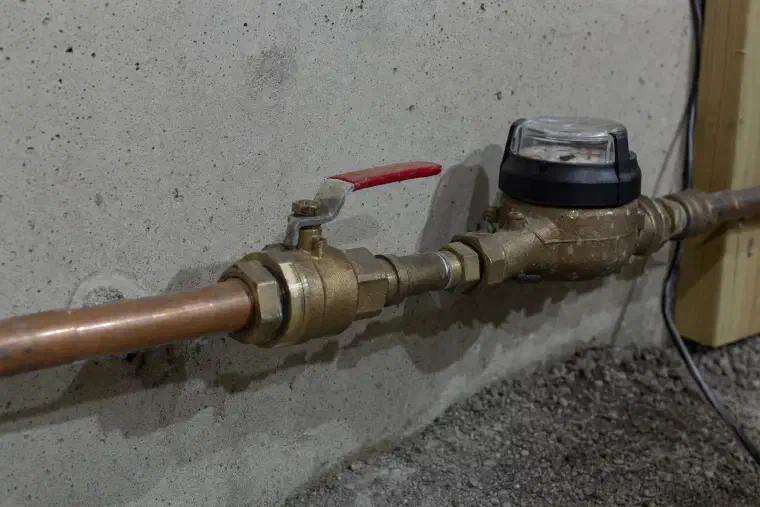
Then shut off the main water valve. If the drip slows or stops, you have a pipe problem. If it keeps going while the house water is off, the water is coming from outside the pipes.
Does turning off the water tell you anything?
Yes. It is the quickest test there is. With the main valve off, a plumbing leak between the valve and the fixtures stops feeding the ceiling, usually within a few minutes. A roof leak doesn’t care what the valve does.
There is a slower check for a slow pipe leak. The EPA suggests you check your water meter before and after two hours (opens in a new tab) with no water being used, and says if the meter changes at all, you probably have a leak. Run it on a dry day, so rain doesn’t muddy the answer.
Who do you call, and when?
This table sorts the usual clues. It won’t settle every case, but it gets most people to the right phone number.
| What you notice | Likely source | Call |
|---|---|---|
| Stain grows on dry, sunny days | A pipe or drain | A plumber |
| Bathroom, kitchen or laundry above the stain | A pipe or drain | A plumber |
| Water meter moves with everything off | A pipe | A plumber |
| Drips during or after rain or snowmelt | The roof | A roofer |
| Stain gets worse only in hard, windy rain | A flashing leak | A roofer |
| Stain grows in cold weather with no rain | Attic condensation | A roofer for a look at the attic |
| Water drips from a vent or air handler | The air conditioner drain | A heating and cooling company |
We’re roofers, not plumbers, so we only take the roof side. If the clues say pipe, call a plumber first. If they say roof, roof repair is the page that covers what we fix.
Can the stain be nowhere near the leak?
It can, and it often is. Water runs along rafters, pipes and the top of the drywall before it finds a low spot to soak through. This Old House says to follow any signs of water uphill (opens in a new tab) to find the source, because the leak likely starts higher up than the stain.
That is why a ceiling stain under a bathroom doesn’t always mean a pipe, and a stain under a bedroom doesn’t always mean the roof. Look at the attic, if you can reach it safely, for dark spots or trails of moisture along the wood. For the roof side, see how to find a leak in your roof.
Is a roof leak or a pipe leak more urgent?
Both are, but a burst pipe is more urgent by the hour, because it keeps pouring until the valve is shut. A roof leak is tied to the weather, so it can sit quiet for days and then start again at the next storm.
For both, speed on the drying matters. The EPA says it is important to dry water-damaged areas within 24 to 48 hours (opens in a new tab) to prevent mold growth. One thing to keep in mind: a ceiling stain is usually the last stage of a roof problem, not the first, so water may have been getting in for a long time before it showed.
What if you can’t tell which it is?
Have the roof looked at. A roofer can rule the roof in or out, and a plumber can do the same for the pipes. Our free roof inspection covers the roof surface, the flashing, the valleys, the gutters and the attic when it’s safe to get in, with a photo report and no obligation to book work.
Finding the exact spot where a roof leak gets in is a separate paid job, typically $150 to $400, and it can take more than one visit. We won’t promise a leak stops after one repair, because leak tracing is a matter of working out the likeliest cause.
Common questions
Who do I call first for a ceiling leak?
If it’s actively pouring and you can’t tell why, shut off the main water valve and call a plumber. If it only leaks in rain, call a roofer. If the water is near a light or outlet, switch off that breaker before you call anyone.
Will a roofer fix the ceiling too?
No. A roofer fixes the roof. Drywall, paint and insulation inside the house are never part of a roof repair, so plan on a separate trade for the ceiling once the source is fixed and the area is dry.
Can I wait until the rain stops to call?
You can, but protect the room right away. Catch the water, keep clear of a sagging ceiling and make the call as soon as the weather allows, because wet insulation and boards keep getting worse while they stay wet.
Does homeowners insurance cover a ceiling leak?
It depends on the cause and your policy, and the policy and the adjuster decide. A sudden pipe burst and a roof leak are often treated differently, so read your policy or call your insurer before you start any big repair.
What to do next
Run the valve test and note whether the leak follows the rain. If it does, or if you aren’t sure, book the inspection and we’ll check the roof and the attic. If the clues say pipe, a plumber is the right first call.


