

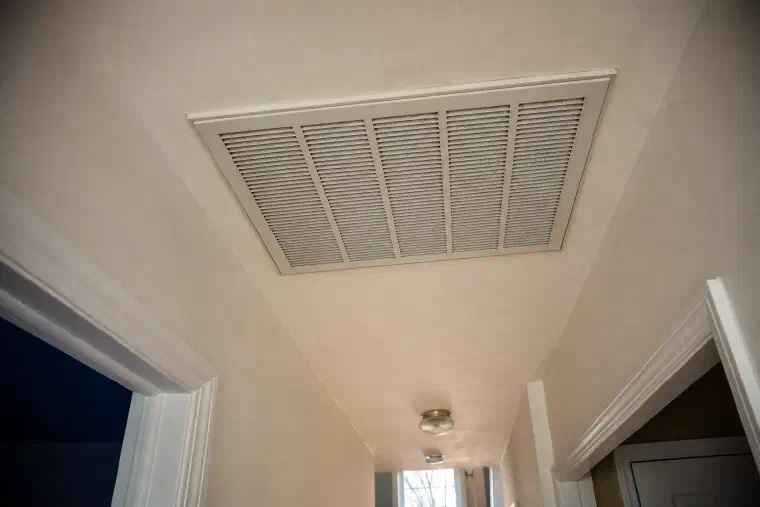
A whole house fan cools the rooms you live in, while an attic fan only cools the attic. A whole house fan sits in the ceiling and pulls outside air through your open windows, then pushes the hot air up and out through the attic. An attic fan sits on the roof or a gable wall and only moves hot air out of the attic space.
The short version
- A whole house fan is for cooling your living space on cool evenings, with windows open. It runs for hours, not all day.
- An attic fan is for the attic only. It is meant to keep roof boards and shingles from baking.
- A whole house fan needs a well-vented attic, or the hot air has nowhere to go.
- An attic fan can pull cooled air out of your house if the ceiling has gaps and the intake vents are short.
- Neither one fixes an attic with blocked soffit vents. Check the airflow first.
What does a whole house fan do?
A whole house fan pulls cool outdoor air in through open windows and exhausts hot indoor air through the attic (opens in a new tab). The Department of Energy says to run it whenever it is cooler outside than inside. In summer that usually means morning, late evening and night.
It is a big fan, normally in the ceiling of a hallway on the top floor. You open a few windows downstairs, switch it on, and the whole house gets a strong breeze. When the sun gets hot, you turn it off and close up. The cooled walls, floors and furniture then keep the house comfortable for a while.
It is not air conditioning. It can only bring in air that is cooler than what is already inside.
What does an attic fan do?
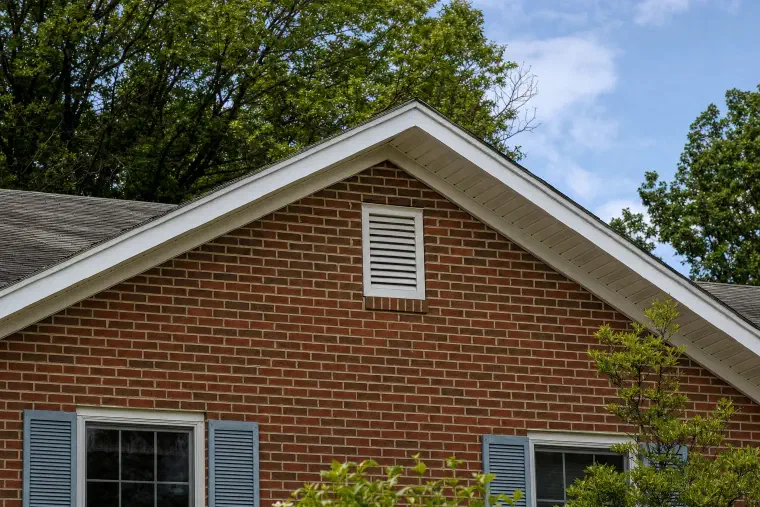
An attic fan is made to cool a hot attic by drawing in cooler outside air (opens in a new tab) through the attic vents. It switches on by itself, usually with a heat sensor, and it often comes as a small dome on the roof. Some run on solar power.
Its job is the roof, not the rooms. A cooler attic is easier on shingles and decking. It is a different goal from a whole house fan, even though both end up moving air through the attic. We cover whether the idea holds up in are attic fans worth it.
How do the two compare side by side?
They differ in what they cool, when they run and what they need from the house.
| Whole house fan | Attic fan | |
|---|---|---|
| What it cools | The living space | The attic only |
| Where it sits | Ceiling of the top floor | Roof or gable wall |
| When it runs | When it is cooler outside, windows open | When the attic gets hot, on its own |
| Needs from you | Open windows, and a switch you use | Nothing, once it is set |
| Needs from the attic | Plenty of vent area | Plenty of intake vents |
| Main risk | Pulling smoke or fumes into the house | Pulling cooled air out of the house |
Most of the table comes down to one point. A whole house fan is a way to cool people, and an attic fan is a way to protect a roof.
Does a whole house fan work where summers are humid?
Not well. The Department of Energy says whole house fans are not recommended in humid climates (opens in a new tab) because they pull in humid air and add humidity to the attic. They suit a dry, moderate climate where the temperature falls a lot overnight.
So the question to ask is whether your nights actually cool off. If the air outside at 10 PM feels as heavy as it did at noon, a whole house fan is moving damp air through your house and into your roof space. Damp air in an attic is the thing we work hardest to keep out of one.
What does your attic need before you add either fan?
The attic needs enough vent area to take the air. For a whole house fan, the Department of Energy gives a guideline of one square foot of vent area (opens in a new tab) for every 750 cubic feet per minute of fan airflow. A big fan can need several square feet of open vents, and that is a lot more than many attics have.
Without it, the fan struggles against its own back pressure and the attic fills with hot, damp air. The Department of Energy also says to caulk the gaps between attic and living space, so the air does not get pushed back down through cracks.
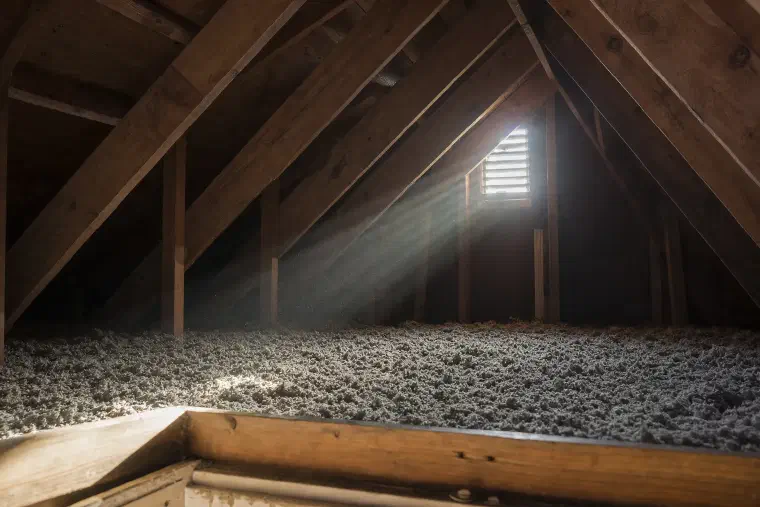
Soffit vents matter just as much. ENERGY STAR warns to never cover soffit vents (opens in a new tab) with insulation. Blown-in insulation pushed against the roof deck is one of the most common ways we see them blocked from the inside. For the sums behind vent area, see how to calculate attic ventilation.
Can an attic fan pull air out of your house?
Yes, and that is its biggest drawback. The fan lowers the pressure in the attic, so it draws conditioned air from the living space (opens in a new tab) up through gaps in the ceiling. Those gaps are around recessed lights, bath fans, pipes and the attic hatch.
The same source adds that studies have shown a fan can use more electricity than it saves on air conditioning. That is why we usually steer people toward better intake and a sealed ceiling first.
A whole house fan has the opposite problem. It is built to move house air, and it can do it hard. The Department of Energy warns it can backdraft a water heater (opens in a new tab) if too few windows are open, which pulls exhaust back into the home. Open plenty of windows before you switch it on.
Which one fits your house?
It depends on what you want fixed.
- You want cooler rooms on dry, cool nights. A whole house fan is the one built for that, if your attic has the vent area and you do not mind leaving windows open overnight.
- You want a cooler roof. Start with air coming in at the soffits and going out at the ridge. A fan is the last step, not the first.
- Your attic is hot and your shingles look cooked. Look at the vents before buying any fan. Poor ventilation is the most underrated roof killer we see, and it can cut a roof’s life nearly in half.
- You already have a ridge vent and gable vents. Adding a fan to that mix usually makes the airflow worse, not better. Mixed exhaust is one of the setups we find most often.
Both fans push their air through the same attic, so a single weak spot in the venting affects both. Our attic venting page explains how a healthy attic moves air, and types of roof vents shows what the options look like.
Common questions
Can I have both a whole house fan and an attic fan?
You can, but they work against each other more often than not. The attic fan wants cool outside air through the soffits, and the whole house fan wants the attic to have somewhere to dump its air. Get the vent area right first, then ask whether you still need either one.
Does a whole house fan hurt the roof?
Not by itself. The trouble comes when the attic cannot take the air, so hot, damp air lingers under the roof boards. The Department of Energy also says to cover the fan from the attic side when it is not in use, so winter heat does not leak up through it.
Is a whole house fan noisy?
Often, yes. The Department of Energy notes that these fans are large and can be loud (opens in a new tab), especially if poorly designed. Many people run them with doors open and windows wide, so the sound carries through the house.
Which fan is cheaper to run?
A whole house fan runs for a few hours at a time, and the Department of Energy puts the motor at 120 to 600 watts (opens in a new tab). An attic fan runs on a sensor, so it may run most of a hot afternoon. What you save depends on how often each one runs.
What to do next
If your attic runs hot or your roof is aging early, have someone look at the vents before you spend money on a fan. Our free roof inspection covers the roof, the vents and the attic when we can get into it safely, and we will tell you what we find, including when the answer is that you do not need a fan.


