

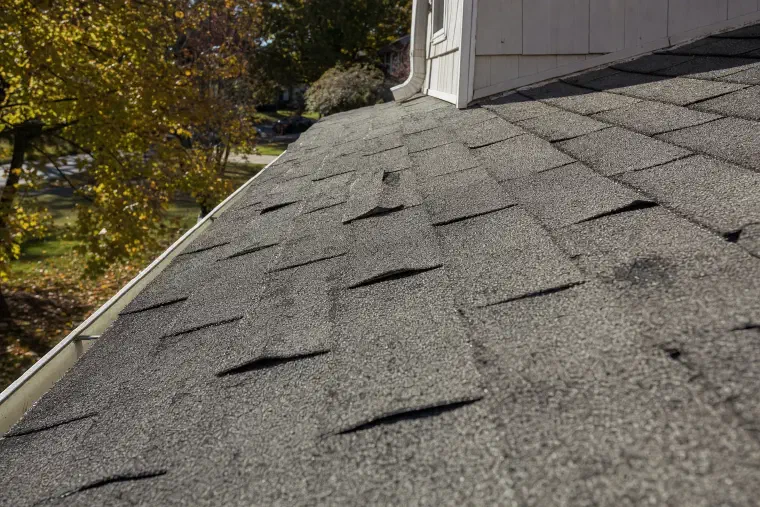
Attic ventilation matters because your attic is the other side of your roof. In summer, trapped heat bakes the shingles from underneath. In winter, trapped moisture and warmth rot the boards and feed ice at the eaves. Moving air in low and out high keeps both problems in check.
The short version
- A vented attic lets summer heat and household moisture out before they damage the roof.
- Air should come in low at the soffits and leave high at the ridge, in about equal amounts.
- Too little intake is the most common fault, and it is invisible from the ground.
- Mixing vent types, such as a ridge vent with gable vents, can short-circuit the airflow.
- Winter is the best time to check, because frost on the roof boards gives the problem away.
What does attic ventilation do?
It swaps the hot, damp air in your attic for cooler, drier air from outside. That sounds minor until you picture what is up there: a closed box under a dark roof, with the heat of the sun on top and the moisture of your house leaking up from below.
The Asphalt Roofing Manufacturers Association says proper ventilation can help ensure the maximum service life (opens in a new tab) of roof materials, and it also moves water vapor from daily living out of the attic. Cooking, showers and breathing all put moisture in the air, and some of it always finds a way up through the ceiling.
How does a hot attic hurt shingles?
A hot attic cooks the shingles from underneath, so they age faster than the sun alone would age them. In summer, roof deck temperatures can increase significantly (opens in a new tab), and a well-vented attic is what carries that heat away. ENERGY STAR describes it as natural airflow that moves super-heated air out (opens in a new tab) of the attic and protects the shingles.
We think this is the most underrated way a roof dies. Nothing leaks, nothing looks broken, and the roof wears out years early. In our experience, an unvented attic can cut a roof’s life nearly in half. Curling edges, blistering and lost granules are the usual signs, and by then the damage is done. It is one reason a 30-year shingle does not always last 30 years.
Why does a damp attic rot the roof boards?
Moisture that cannot escape condenses on the cold underside of the roof boards, and wood that stays damp rots. Without ventilation, the vapor from your daily life gets trapped, and the Asphalt Roofing Manufacturers Association lists wood rot in the framing and decking as a result of condensation in the attic (opens in a new tab).
The sneaky part is that the roof can fail without a single drop coming in from above. Warm, humid air leaks up through recessed lights, bath fans, plumbing pipes and the attic hatch. In winter it hits the cold decking and turns to frost. The boards soak it up, dry out, and soak it up again, dozens of times, until they delaminate. If you ever wonder why a ceiling stain shows up on a dry day, this is one reason, and it is covered in why a roof leaks after the rain stops.
What does ventilation have to do with ice dams?
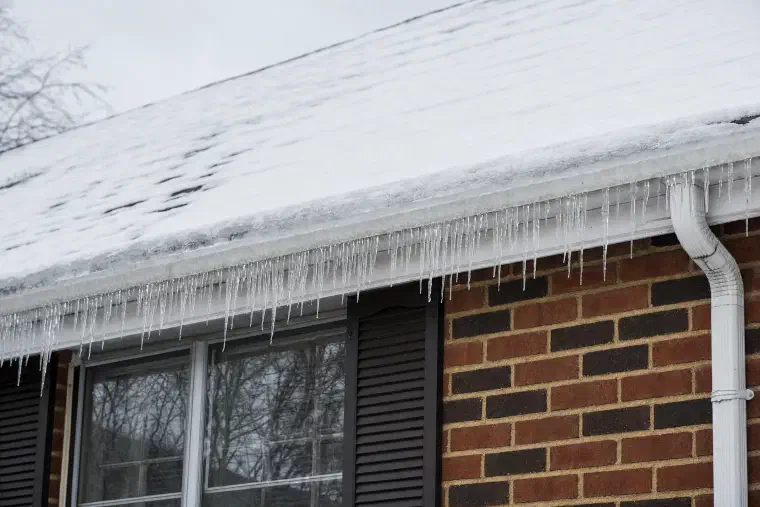
A cold roof deck is what keeps snow from melting and refreezing at the eaves. The Department of Energy’s Building America program explains that when heated air from the house escapes into the attic, it warms the underside of the roof deck (opens in a new tab) and melts the snow above. That water runs down to the cold edge and freezes into a ridge of ice.
The same guide says it is critical to vent the roof in cold climates to keep the roof cool (opens in a new tab), and that the most important step is sealing the air leaks from the house into the attic. Ventilation and air sealing work as a pair. A full gutter also gives the ice something to build on.
How much ventilation does an attic need?
The usual rule is 1 square foot of open vent area for every 150 square feet of attic. The Asphalt Roofing Manufacturers Association states the rule as 1 square foot of net free area (opens in a new tab) for every 150 square feet of vented space, and building codes can allow a smaller ratio of 1 to 300 in some cases. “Net free area” means the part of a vent that air can pass through, which is less than the size of the vent on the outside.
The split matters as much as the total. The same source says the ideal is 50 percent intake and 50 percent exhaust (opens in a new tab), with cooler, drier air entering low near the eave and warm, moist air leaving high.
| Part of the system | Where it sits | Its job |
|---|---|---|
| Soffit vents | Under the roof edge | Let cool outside air in |
| Baffles | Between the rafters at the eaves | Keep insulation from blocking the intake |
| Ridge vent | Along the peak | Lets warm, damp air out |
| Ceiling air sealing | Lights, hatch, pipes, fans | Stops house air leaking up |
Why do most attics get this wrong?
Most attics do not have enough intake. The same ARMA article says excess intake is better than excess exhaust, because most attics lack proper intake, which it calls the leading cause of venting callbacks (opens in a new tab). We see the same faults again and again:
- A ridge vent was added, but the soffits behind it were never cut open.
- Insulation was blown against the roof edge and covers the intake.
- A bath fan or dryer vent ends in the attic instead of outside.
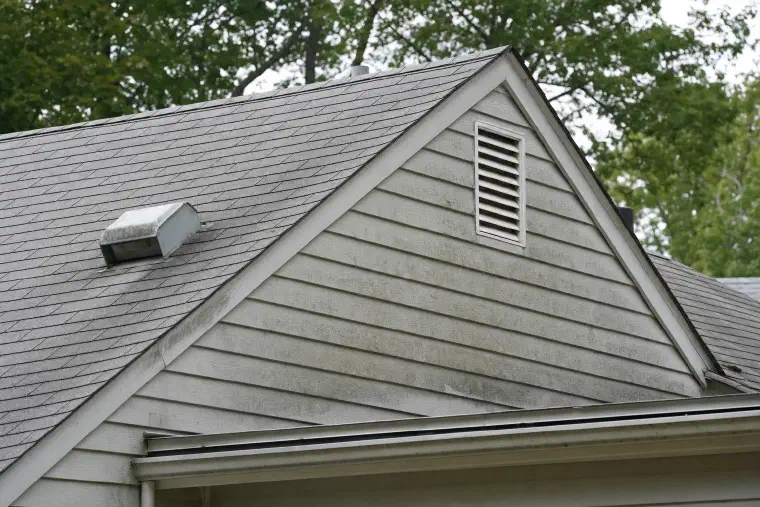
Then there is the mix of vent types. Ridge vents, gable vents, box vents and fans on one roof compete with each other. Building America says gable-end vents should not be used with a ridge vent because they are likely to short-circuit the airflow (opens in a new tab). We covered the fan version in are attic fans worth it.
How can you tell if your attic is not venting?
Look at the attic on a hot afternoon and on a freezing morning. The signs are easy to spot once you know them:
- The attic is far hotter than outside in summer.
- Upstairs rooms stay hot however hard the air conditioning runs.
- Frost or water droplets cover the underside of the roof boards in winter.
- There is a musty smell, or mold or dark staining on the boards.
- Shingles curl or blister early, or ice builds up along the eaves.
Winter is the best time to look. Frost on the underside of the roof boards on a cold morning shows a moisture problem that stays invisible the rest of the year.
Common questions
Should I add more vents to my roof?
Not before you check the intake and the ceiling. Clear soffit vents and sealed gaps in the ceiling fix more attics than a new vent on top does, and a new exhaust vent added to a roof with no intake pulls air from the wrong places.
Is a ridge vent enough on its own?
Only if air can get in at the bottom. A ridge vent with blocked or missing soffit vents has nothing to pull from, so it does little. The intake is usually the part that needs fixing.
Will our free inspection check the attic?
We look at the attic when we can get in safely. We do not run a full vent-area calculation as part of the free visit, so if the vents look wrong, we say so and talk through what a fix would involve. Extra venting beyond the code minimum is priced as its own line on a new roof.
Can I fix attic ventilation myself?
You can clear paint or insulation from the soffit vents, and that is a good first step. Cutting new vents into a roof is different, because every hole in a roof has to be sealed correctly or it leaks.
What to do next
If your attic runs hot in summer, shows frost in winter, or your shingles are aging faster than they should, have it looked at. Our attic venting page explains how we check and fix it, and our free roof inspection is the easy way to start.


