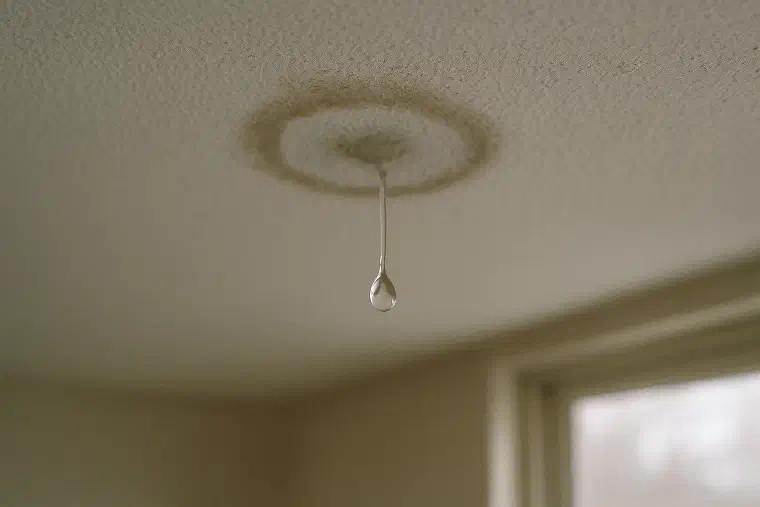
A leak that drips hours after the storm ended is usually water that pooled in the attic or wall cavity yesterday, not a new rainfall. Water travels 10 to 15 feet along rafters and sheathing before it finds a path down through your ceiling. A small repair starts around $350 to $550 now, but letting it go can turn into decking replacement at $1,500 to $5,000.
TL;DR
- Water moves slowly through the roof assembly, so the drip you see today often started entering hours earlier.
- Most post-rain leaks trace back to flashing, pipe boots, or skylight seals, not the shingles themselves.
- Clogged gutters and debris dams can hold water that keeps seeping out long after the rain stops.
- Attic condensation and frost melt can mimic a roof leak days after a cold snap, with no rain at all.
- Intermittent leaks still rot the decking every time, so even a “sometimes” drip needs attention.
How does water travel through a roof assembly and cause a drip hours later?
Water follows the path of least resistance, often moving sideways along roof sheathing, rafters, and underlayment for 10 to 15 feet before it finally drips through a gap in the ceiling. The stain you spot in the living room may mark the end of that journey, not the entry point. That is why a leak that started during yesterday’s downpour can show up as a slow drip this morning: the water was in transit the whole time.
The entry point is rarely directly above the stain. Water enters at a failed flashing joint or a lifted shingle, runs down the slope, hits a rafter, and follows it until it finds a light fixture box, a drywall seam, or a crack in the vapor barrier. This delayed behavior is well documented in roof assembly moisture movement studies from building science researchers, which show that water can travel surprisingly far through the framing before gravity pulls it into the living space. That means a common afternoon thunderstorm can produce a ceiling drip at midnight.
If you are seeing a drip after the rain, the water has probably been entering for weeks or months, slowly wetting the insulation and decking before finally breaking through. Repairing that one small leak now costs far less than replacing a section of rotted sheathing later. A roof repair call can trace the real path and stop the damage before it multiplies.
The real entry points: flashing, penetrations, and worn seals
Flashing details are the number one suspect because they rely on metal-to-shingle overlaps, and often on sealant that has a limited lifespan. Most delayed roof leaks do not come through the field of the shingles. They come through the joints, the pipes, the skylight frames, and any place where one material meets another.
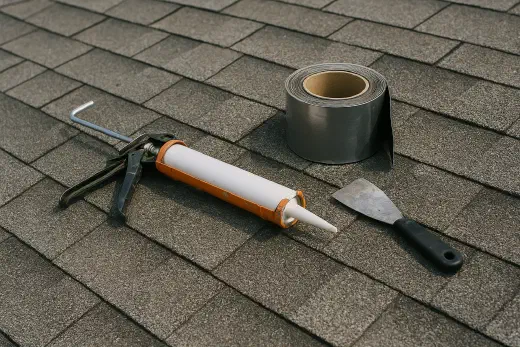
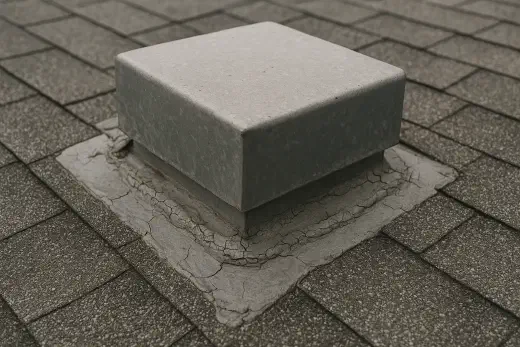
Chimney and wall flashing, metal pipe boots, and skylight seals all degrade faster than the shingles around them. A chimney flash that depends on caulk instead of a properly cut reglet is essentially a scheduled leak: the sealant will crack and pull away within 5 to 10 years, allowing water in every time wind drives rain against that side of the house. The water then runs down inside the chase and drips out near the fireplace hours later. A pipe boot with a cheap rubber collar can dry-rot, crack, and let water in during heavy rain; the water may travel along the pipe and drip onto a bathroom ceiling far from the roof penetration.
This is why a flashing repair often solves a mystery drip that has nothing to do with the shingles. A chimney reflash typically costs $800 to $2,200, and a skylight leak that is really a flashing failure can often be resolved without replacing the glass. The shingles may look perfect, but the real leak is hiding at the edges.
How do clogged gutters and debris dams cause lingering drips?
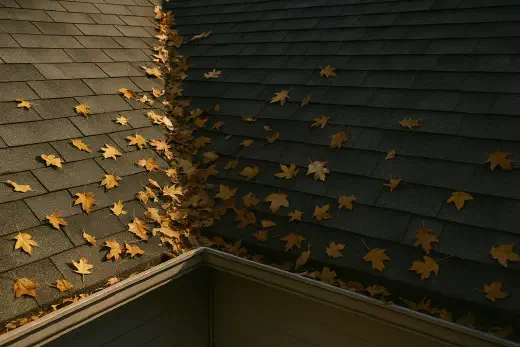
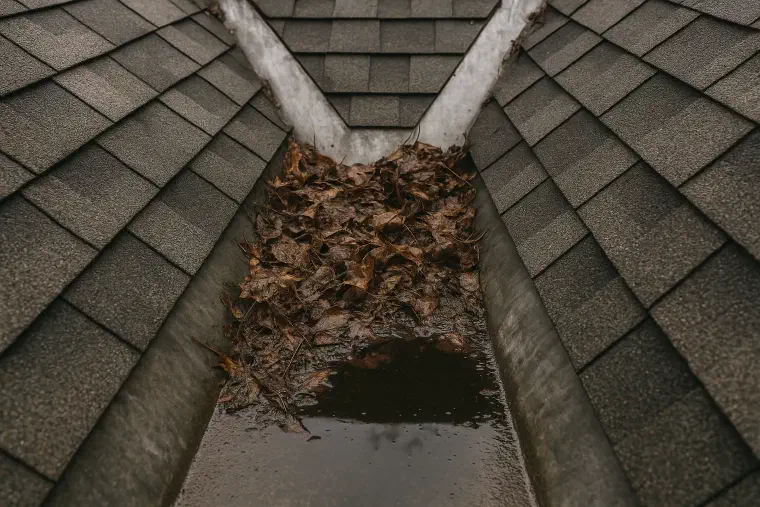
A full gutter or a valley packed with wet leaves holds a reservoir of water that keeps seeping under the shingles long after the rain stops. The water backs up behind the debris, climbs above the ice-and-water shield line, and finds its way onto the roof deck through nail holes or the joints between courses. It can take hours for that trapped water to drain away and drip through the ceiling.
Even a partially blocked gutter can send water wicking behind the gutter apron and into the fascia board, starting rot that eventually reaches the rafter tails and the first few inches of roof decking. That damage is almost invisible from the ground and the attic because it hides behind the gutter. Once the fascia softens, a simple gutter cleaning turns into a structural repair that involves replacing fascia, rafter ends, and decking.
Valleys packed with pine needles or twigs work the same way. The debris dam forces water to spill sideways under the shingles, where it can travel down the roof slope inside the assembly and drip out near an interior wall. If you see water stains that appear only after a storm, check the valleys and downspouts before you assume the shingles themselves have failed. Sagging gutters that no longer pitch toward the downspout can hold a pint of water for every foot of run, releasing it slowly for a day or more.
Why does attic condensation cause leaks when it isn’t raining?
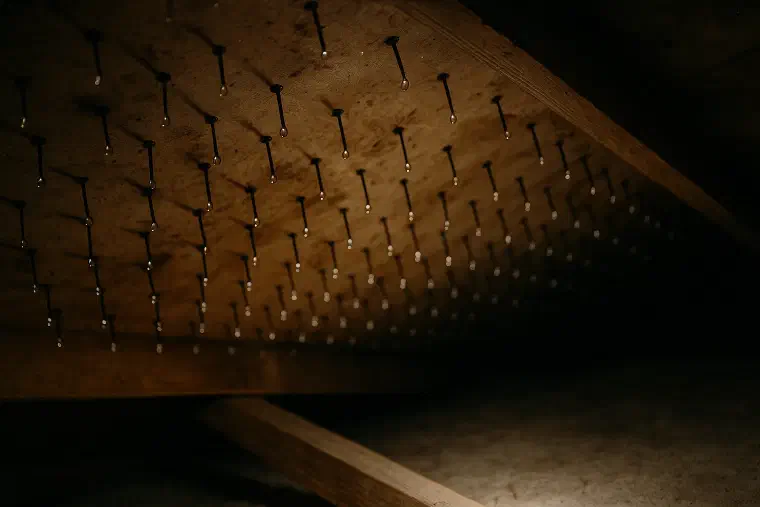
A ceiling stain that shows up on a dry, sunny day often traces back to condensation, not a roof leak. Warm, moist air from the house leaks into a cold attic through can lights, bath fans that terminate in the attic, or gaps around the hatch, and condenses on the underside of the roof sheathing. In winter, that condensation freezes into frost. When temperatures rise, the frost melts and drips onto the insulation and the ceiling below, creating a wet spot that looks exactly like a new roof leak.
Frost on the underside of the sheathing is the telltale sign, which is why winter is the best time to look inside an attic. This phenomenon is explained in building science research on attic moisture: even a small air leak from the house can carry enough humidity to produce what looks like a plumbing leak after a cold night. The pattern is often worse after severe cold, not after rain, so it can mislead a homeowner into chasing a roof problem that is really a ventilation problem.
The fix is not a new roof. It is attic venting that balances intake and exhaust so the attic stays cold and dry. Sealing ceiling penetrations and terminating exhaust fans to the outside are equally important. Without that, the condensation drip will keep coming back, staining the ceiling again and rotting the sheathing from underneath.
Why does my roof leak only during certain storms and not others?
A leak that appears only when the wind blows hard from a particular direction is usually a flashing gap. The rain is driven sideways against a wall or chimney, finding a seam that stays dry during a gentle vertical rainfall. That is why the same roof can sail through a day-long drizzle and then drip 20 minutes into a windy thunderstorm.
Wind direction, rain intensity, and duration all determine whether the water reaches the vulnerable spot. A flashing detail that is open on the south side may never leak from a north wind, so the problem seems to come and go at random. Repeated sub-threshold wind events, gusts around 40 mph that break shingle seal bonds over many seasons, create another kind of intermittent leak. The shingles look intact, but they are no longer sealed, so water can slip under them during any storm with enough wind.
These patterns are diagnosed by matching the leak timing to the weather data for that week. A storm damage repair inspection looks for wind-lifted shingles, broken seal strips, and flashing that only opens under pressure. A roof that leaks sometimes and not others is not a minor mystery; it is a specific failure that will only get worse.
Step-by-step: what to check when your roof drips after the rain
A quick walkthrough can narrow down the source before you call anyone. The table below covers the most useful checks a homeowner can do safely from inside the attic or from the ground with binoculars.
| What to check | What to look for | What it tells you |
|---|---|---|
| Attic sheathing with a flashlight | Wet wood, dark stains, frost on underside of decking | Points to the entry area (or condensation) |
| Ceiling stain shape and location | A ring that grows, a bulge, or water in a light fixture | Bulge means active water; light fixture means potential electrical danger |
| Chimney and skylight perimeters | Rusted metal, cracked sealant, daylight gaps | Flashing failure at the joint |
| Roof valleys from the ground | Piles of debris, shingles lifted at edges | Debris dam causing backup |
| Gutters and downspouts | Overflow marks, sagging sections, water behind gutter | Clogged or loose gutters feeding water into the eave |
| Roof surface with binoculars | Missing shingles, curled edges, nail pops | Storm or aging damage that can let water in under wind |
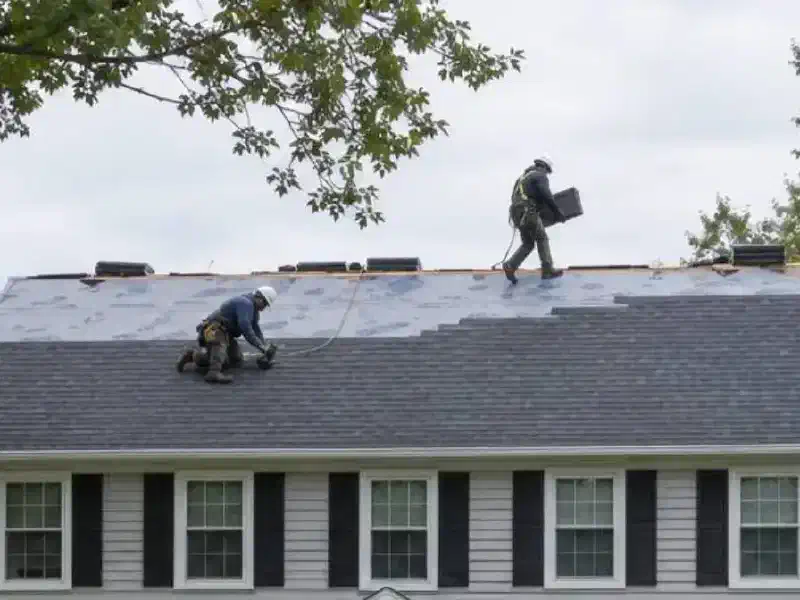
If that checklist turns up anything suspicious, a free roof inspection from a local roofer puts boots on the roof, lifts shingles at the suspect spots, and delivers a written report with photos and a remaining-life estimate. It removes the guesswork without costing a dollar.
When should you call a roofer for a drip that appears after the rain?
Call right away if the drip is near an electrical fixture, if the ceiling is bulging, or if the water is staining a large area. A bulge means water is pooling in the drywall and could collapse. Water near wiring is an immediate safety hazard. In those cases, interim emergency tarping costs $350 to $900 and buys you time to plan a proper repair.
A single small stain that has not grown in a few days is less urgent, but it still needs attention. The absence of new water does not mean the decking and insulation above it are dry. Rot continues even when the dripping stops. A emergency roof repair call is appropriate after any storm that leaves visible damage, but even a slow post-rain drip is worth investigating proactively.
The best time to act is the first time you notice it. A flashing fix or a cleared valley today prevents the decking replacement and mold remediation that a neglected leak will eventually demand. If you are unsure, get a free quote and let a professional trace the water path before it gets expensive.
Frequently asked questions
Why is my roof leaking even though it’s not raining?
Condensation from a poorly vented attic, a leaking HVAC condensate line, or a pinhole in a plumbing pipe inside the ceiling cavity can all produce drips without any rain. On cold nights, frost that built up on the attic sheathing melts when daytime temperatures rise, dripping onto the ceiling below exactly like a roof leak.
Can a roof leak be harmless if it only happens once in a while?
No. An intermittent leak still wets the decking, insulation, and framing every time it occurs. The water may enter only under specific wind conditions, but each event adds more moisture and advances the rot, even if the ceiling stain stays small and dry in between.
How much does it cost to find and fix a small roof leak?
A single leak diagnosis and repair call typically runs $500 to $1,600, with the minimum call-out around $350 to $550. A free inspection can often pinpoint the entry point before you commit to any paid repair work, saving the diagnostic cost.
Will my homeowners insurance cover a leak that shows up after the rain?
Coverage depends on the cause. Sudden storm damage, such as wind-lifted shingles or a falling branch, is usually covered, while long-term maintenance issues like worn flashing or clogged gutters are not. A roofer can document the damage for your adjuster, which helps with the claim.
How long can I wait before fixing a roof leak?
Not long. A stain that appears today usually means water has been entering for weeks or months. Delaying a repair turns a simple flashing fix into a decking replacement and possible mold remediation, multiplying the cost several times over.