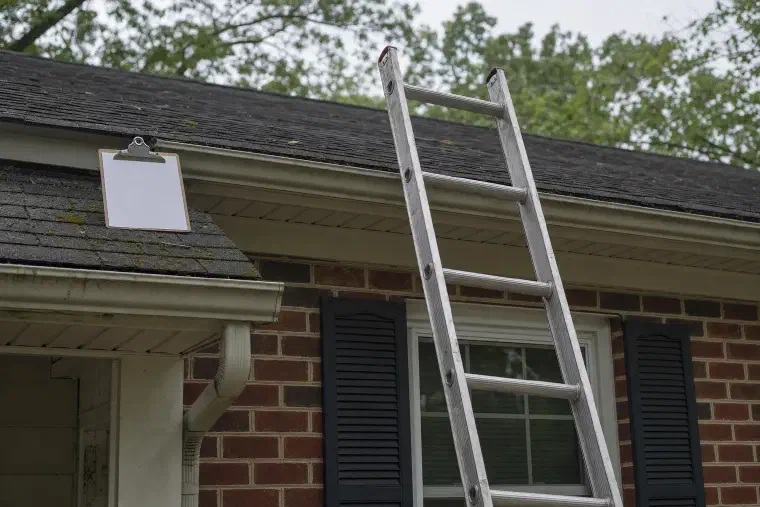
Insurance companies ask for a roof inspection because the roof is the part of a house most likely to cause a big claim, and its age and condition tell them how risky your home is to insure. They want proof of what shape it is in before they price a policy, renew one, or pay for damage.
The short version
- An insurer wants to know how likely your roof is to fail, and how much it would cost them if it does.
- It can ask at three moments: when you apply, when you renew, and when you file a claim.
- Age and wear matter more than most people expect. Wear and tear is not covered, and an older roof may be paid out at a lower value.
- A roofer’s report with photos can help you show what you have. The policy and the insurer’s adjuster decide what is covered.
- Our roof inspection is free, but it is not the same as an independent one. More on that below.
When do insurers ask for a roof inspection?
They ask at three points: when you apply for a policy, when it comes up for renewal, and after you report damage. Each one has a different goal.
When you apply, the Texas Department of Insurance says your insurance company will inspect your roof (opens in a new tab) and may charge you more or refuse to insure you based on what they see. At renewal, the question is whether anything has changed. After a storm, the question is what the storm did and what was already worn out.
Maryland sets its own rules for the first stretch. The Maryland Insurance Administration explains that insurers have an initial 45-day underwriting period (opens in a new tab), and can cancel with notice if they find you are not eligible within it. That is why a letter asking for roof photos can land a few weeks after you buy a house.
What is the insurer trying to find out?
It is trying to find out how old the roof is, what shape it is in, and whether it has problems that could turn into a claim. Water getting in is the costly one, and it usually starts at a weak spot rather than across a whole roof.
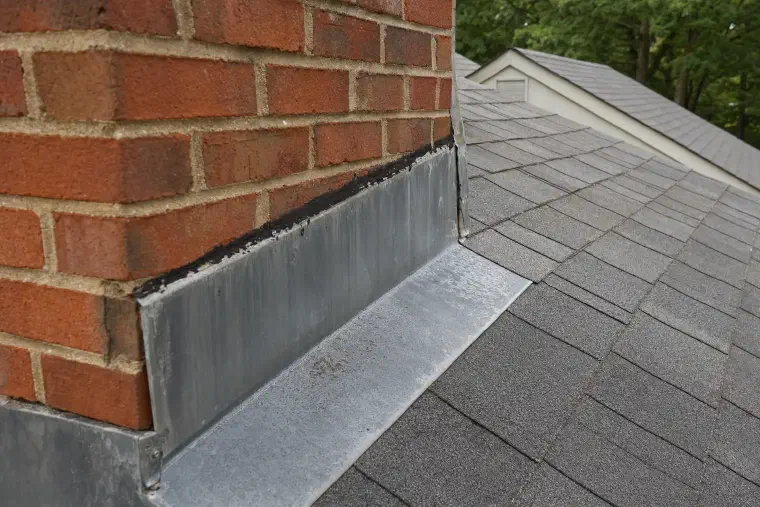
We see those weak spots all the time. Flashing is the thin metal that seals the joints around chimneys, walls and vents, and it is where roofs actually leak. Caulk holding it in place lasts five to ten years, so a joint that relies on sealant is a leak on a timer. Shingles with their nails set too high, and attics that cannot breathe, are the other two we run into most.
An inspector looking for an insurer is checking much the same list we would:
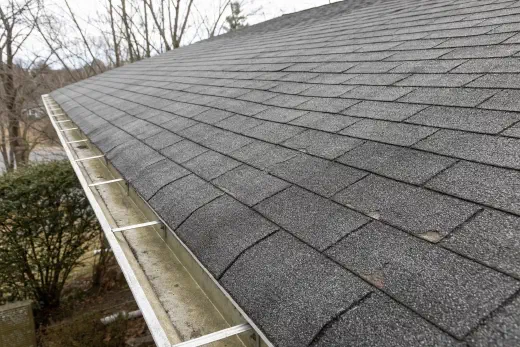
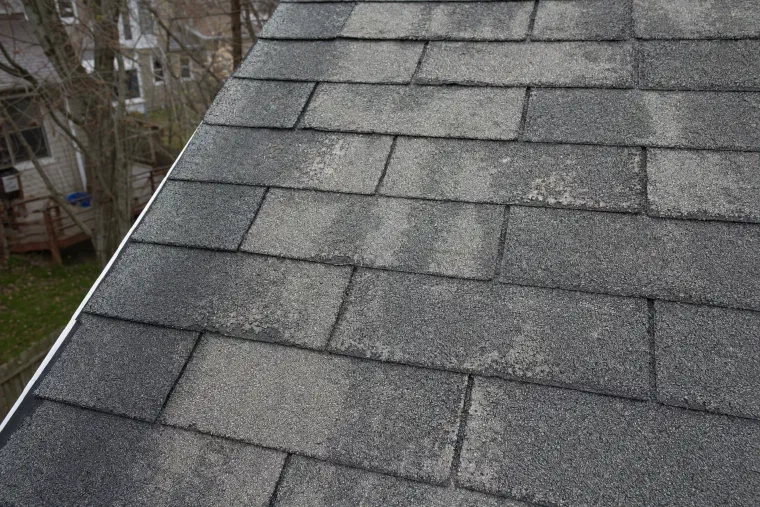
- Cracked, curled or missing shingles, and bare patches where the gritty top layer has worn off
- Flashing around the chimney, vents and walls
- Soft spots in the roof surface
- Signs of leaks in the attic, if it can be reached
- Old patches, tar and other past repairs
- Roughly how many years are left
Why does roof age matter so much?
Age matters because a roof loses value as it wears, and policies pay out on that lower value. The Texas Department of Insurance notes that some companies will switch (opens in a new tab) to actual cash value as roofs age. Actual cash value means what the roof is worth today, not what a new one costs.
Their example shows the gap. On a $10,000 roof with a $4,000 deductible, a replacement cost policy pays $6,000 whatever the age. An actual cash value policy pays $4,500 on a 5-year-old roof (opens in a new tab), $3,000 at 10 years, and $0 at 20 years. That is Texas, and your own policy sets the terms, but the pattern is the reason insurers care about age.
Here in Maryland, asphalt shingles realistically last 18 to 25 years. Our guide to how long shingles last covers what shortens that.
What does a roof inspection mean for a claim?
It lets the insurer separate sudden damage from slow wear, because policies treat the two differently. The Maryland Insurance Administration lists wear and tear and deterioration (opens in a new tab) among the common exclusions on a standard homeowners policy.
So a hailstorm that bruises shingles is a different matter from shingles that have reached the end of their life. An adjuster looks at the roof to tell which is which. Our view is that storms tend to reveal weak spots more often than they ruin a sound roof, and a record of the roof’s condition from before the storm helps everyone see what changed.
A few other things to know:
- The same Maryland guide says an insurer may decline to renew if there is a change in the condition of the home (opens in a new tab) that raises the hazard, or if you have filed three or more weather-related claims in three years.
- Keep photos or video. Maryland’s guide points out that the burden of proving a loss is yours, and having them helps.
- Do not throw out damaged material until the adjuster has seen it or says you can.
We cannot tell you what a claim will pay. Your policy and the insurer’s adjuster decide that.
Can a roofer’s inspection stand in for the insurer’s?
Sometimes it helps, but it does not replace the insurer’s own review. An insurer can ask for photos, a report or its own visit, and what counts is up to them. Ask what they will accept before you pay for anything.
Our free roof inspection includes a walk on the roof, a look in the attic when we can get in, and a written report with photos and an estimate of the years left. We are plain about its limits, though. A free inspection is a sales visit, and we are paid when jobs close. For a claim dispute, or a report an insurer or buyer must trust, an independent inspector is the better pick. The same service also leaves out insurance condition forms, which are a paid service that typically runs $150 to $400.
| Type of inspection | Who it is for | Typically runs |
|---|---|---|
| Our contractor inspection | You want to know the roof’s condition | $0 |
| Home inspector’s roof section | You are buying a house | $150 to $250 |
| Standalone independent inspector | A claim dispute or a report others must trust | $200 to $450 |
| Insurance condition forms | The insurer asks for a signed form | $150 to $400 |
How should you get ready?
Get the roof looked at before the insurer asks, and keep the paperwork. Fixing a small problem on your own schedule beats finding it on the insurer’s.
- Find the roof’s age: the receipt, the permit, or the seller’s records.
- Have the roof checked, and fix flashing and loose shingles first. Our piece on what a roof inspection includes shows what to expect.
- Photograph the roof and attic in good light, with dates.
- Keep every repair invoice in one folder.
- After a storm, check from the ground and write down what you see. Our guide to storm damage signs tells you where to look.
Common questions
Can my insurance company drop me because of my roof?
In Maryland, an insurer may decline to renew if the home’s condition changes in a way that raises the risk, or if you break its underwriting rules. That is from the Maryland Insurance Administration’s guide. How that applies to your roof depends on your policy, so ask your insurer or agent.
Who pays for the roof inspection?
It depends on who asks. We do ours for free. An independent inspector or a form for your insurer is typically paid by you. See what a roof inspection costs for the ranges.
How long does an inspection take?
The visit takes one to two hours. We usually deliver the report the same day or within 24 to 48 hours. Scheduling typically takes two to five business days, and after a storm it can take one to three weeks.
Will an inspection mean my claim is approved?
No. An inspection is a snapshot of the roof. It does not guarantee a claim will be paid.
What to do next
If your insurer has asked about your roof, or you would like to know the answer before they do, book our free roof inspection. The phone is answered 24/7.