

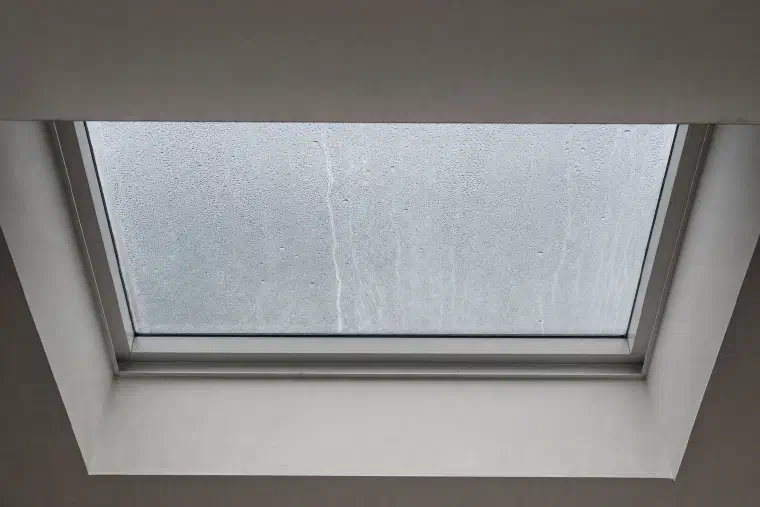
Condensation on your skylight means warm, damp air from inside your house is landing on cold glass. The glass is one of the coldest surfaces in the house, so the water shows up there first. It is usually a sign of too much moisture in the room, not a leak in the roof.
The short version
- Water on the room side of the glass on a cold morning is usually condensation, not a leak.
- Showers, cooking and a closed-up house push moisture into the air, and the glass is where it lands.
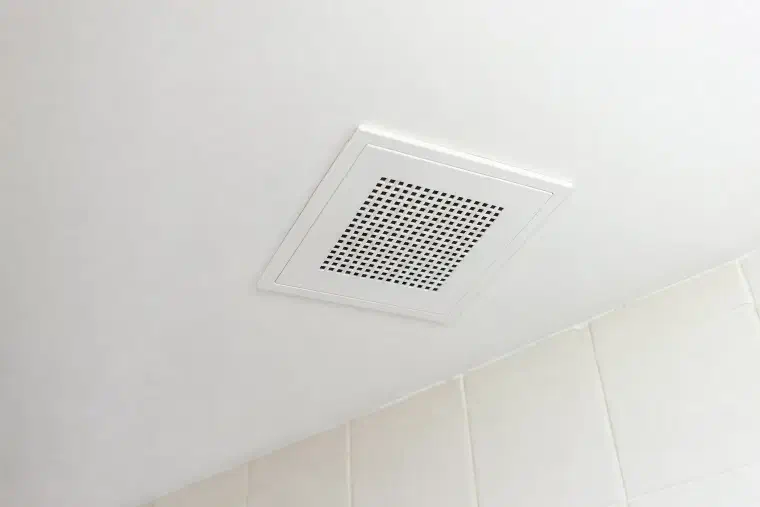
- Lower the humidity first: run the bath fan and keep the number in the 30 to 50 percent range.
- Fog trapped between the two panes is a different problem. The seal has failed, and the glass unit needs replacing.
- Drips that show up during or after rain point to the roof, not the air.
How do you tell condensation from a leak?
Look at when and where the water shows up. Condensation appears on cold mornings whether it rained or not, while a real leak tends to show up during or right after rain. We check both when we look at a skylight, because the fixes have nothing in common.
| What you see | When it shows | Most likely cause |
|---|---|---|
| Beads or a film on the room side of the glass | Cold mornings, after showers or cooking | Moisture in the air |
| Drips from the frame that stop on dry days | Cold, dry spells | Condensation running off the glass |
| Cloudy haze you can’t wipe off | All year, worse in damp weather | Failed seal between the panes |
| Stains or drips around the opening | During or after rain | Flashing or a seal on the roof |
If the drip only comes with rain, skip ahead to how to fix a skylight leak. The rest of this article is about the other kind.
Why does a skylight get condensation?
Because glass is a poor insulator and a skylight faces the sky. Warm air holds a lot of water. When that air touches something colder, it can’t hold as much, and the extra comes out as droplets.
The EPA’s advice is short: you prevent moisture from condensation by raising the surface temperature or lowering the moisture (opens in a new tab) in the air. Nobody is going to warm up a pane of glass on the roof. That leaves the air.
Warm air also rises, so the moist air in a room drifts straight up to the skylight. A wall window gets some of it. A skylight gets more.
Where does all that moisture come from?
From ordinary life. University of Minnesota Extension lists bathing, cooking, dishwashing and breathing (opens in a new tab) as sources of indoor moisture. It also lists window condensation in winter as a symptom of too much of it.
A few things make it worse:
- A shower with the bath fan off or switched off too soon
- Drying laundry indoors
- Cooking with pots uncovered and no fan over the stove
- A house sealed up tight for the winter
- A dryer or bath fan that ends in the attic instead of outside
That last one matters to the roof too. Warm, damp air that leaks into the attic condenses on the cold underside of the roof deck in winter. The wood soaks it up and dries out again through dozens of cycles, then starts to break down, all without a drop of rain getting in from above. We tell homeowners that winter is the best time to look in an attic, because frost on the underside of the deck shows the problem plainly. Our article on mold in the attic goes into it.
What humidity level stops it?
Between 30 and 50 percent is the target. The EPA says to keep indoor humidity below 60 percent (opens in a new tab), ideally 30 to 50 percent, and says higher than 60 is likely to cause condensation in the building.
In the dead of winter, aim for the low end of that range. The colder it is outside, the colder the glass gets, and the less moisture the air can carry before it lands there. A small humidity gauge costs little and tells you where you stand, so you aren’t guessing from the glass.
What helps stop it?
Get the moisture out of the house before it reaches the glass. In order of effort:
- Run the bath fan after every shower. A lab at the Department of Energy recommends leaving it on for one hour after a shower (opens in a new tab). A timer switch does it for you.
- Make sure the fan vents outside. The same guide says to vent it directly to the outside (opens in a new tab), not into an attic or crawlspace.
- Use a fan when you cook, and cover the pots.
- Check the fans that you have. University of Minnesota Extension says to install or inspect and repair exhaust fans (opens in a new tab) in your bathrooms.
- Keep air moving near the glass. Don’t pack plants or stacks of boxes under the skylight.
If your bath fan drips water, that is its own problem, and we cover it in a bathroom exhaust fan leaking water.
When is condensation a sign of a bad skylight?
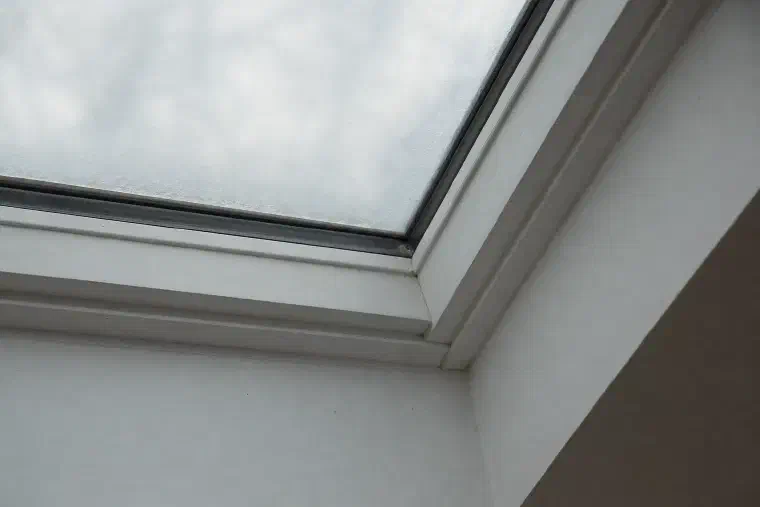
When it is between the panes, or when it never goes away. A modern skylight has two layers of glass with sealed air between them. If you see fog or a milky haze that you can’t wipe off, the seal has failed and moisture has got into that gap.
That is not a humidity problem, and no fan will fix it. The glass unit has to be replaced, and sometimes the whole skylight is the better buy, since the flashing comes off either way. Condensation diagnosis is part of our skylight repair, along with reflashing and glass unit replacement.
Replacing a skylight on its own typically runs $1,200 to $3,000. A reflash typically runs $900 to $2,000. These are area ranges, not a quote. Our skylight replacement cost article breaks down what moves the number.
Common questions
Is condensation on a skylight bad?
A little on a cold morning is normal and harmless. Water that keeps running down the frame, stains the ceiling or leaves dark spots is worth dealing with, because damp wood and drywall around the opening can rot or grow mold.
Will a new skylight fix the condensation?
Only if the old one has failed. A new skylight in the same humid room will still collect water on cold days, though it may do so less. Fix the moisture first.
Does condensation mean the roof is leaking?
Not by itself. Condensation forms on the inside of the glass from room air, while a roof leak comes from the outside in. The two can happen together, though, so if you see stains around the opening after rain, have it looked at.
What to do next
If you can’t tell whether yours is condensation, a leak or a failed seal, our skylight repair page explains what we check. Our free roof inspection is also a good start, with the attic checked when we can reach it. Call us any time, day or night.


